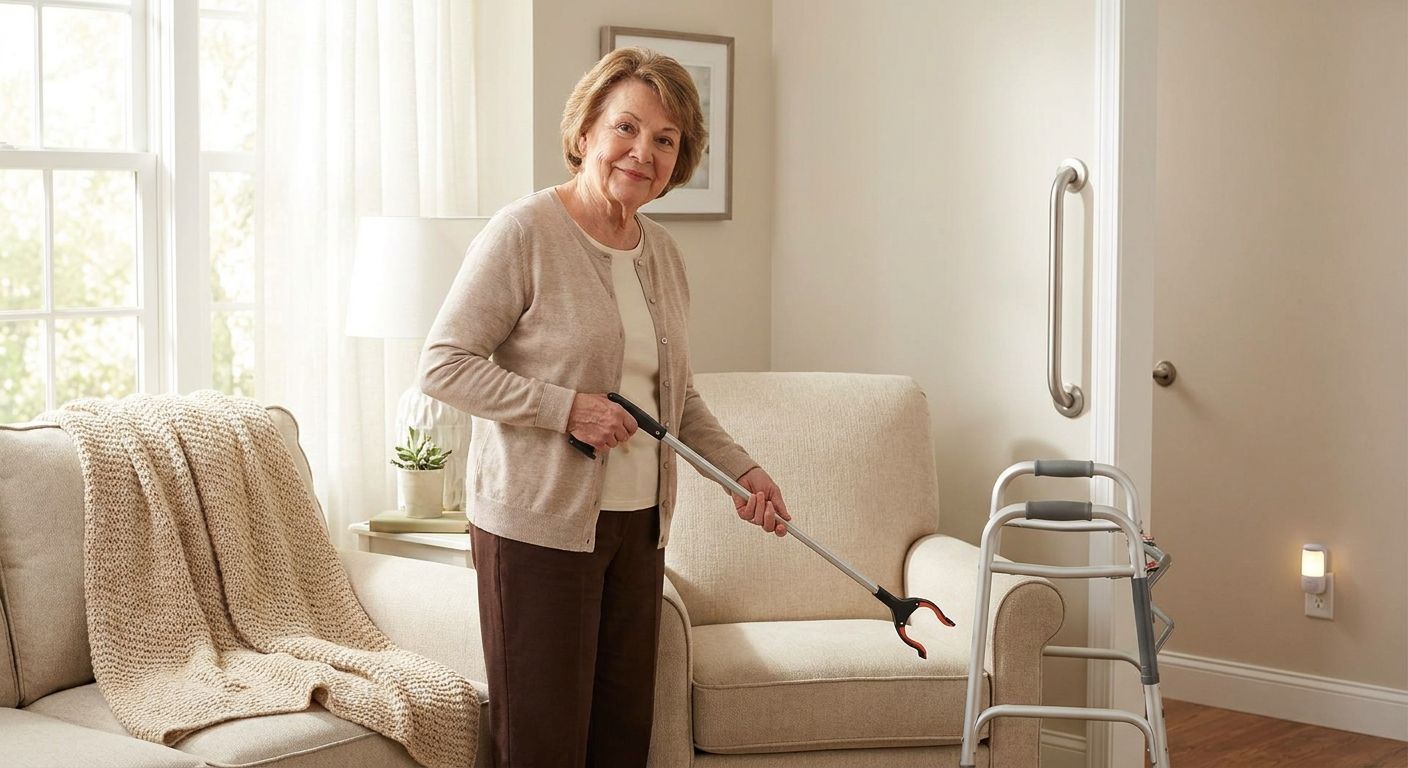
Fall prevention aids for seniors living alone reduce the odds of a stumble turning into an emergency when there's no one else home to help you up or call for help. Living alone changes the math on every near-miss: a wobble that's embarrassing with family in the next room becomes hours on the floor when you're by yourself.
- Fall prevention aids for seniors living alone start with grab bars, lighting fixes, and a chair that helps you stand without pushing off.
- The CDC reports roughly one in four adults 65 and older falls each year — living alone raises the stakes of every one.
- A power lift recliner reduces the sit-to-stand risk that causes many falls in living rooms and bedrooms in 2026.
- Fix free hazards first: loose rugs, dim hallways, and low furniture cause more falls than equipment failures do.
Why fall prevention aids matter for seniors living alone
Falls are the leading cause of injury among older adults, and the Centers for Disease Control and Prevention has tracked for years that close to one in four Americans 65 and older falls at least once a year. With a spouse, roommate, or adult child in the house, a fall gets noticed in minutes. Living alone removes that safety net entirely.
The highest-risk moments aren't dramatic. They're the ordinary transitions: getting up from a low couch at 2 a.m., stepping out of the shower, bending to pick something off the floor. A chair built for electric lift recliners for people who live alone removes one of those moments from the daily routine by tilting you forward onto your feet instead of asking your knees and hands to do the work.
In 2026, the fixes that matter most for this segment aren't exotic. They're the same handful of changes an occupational therapist would flag on a home visit, plus one or two pieces of equipment that address the specific gap of having no one around.
Audit your home for fall hazards
Start with a walk-through, not a purchase. Most fall risks in a home lived in by one person accumulate quietly over years and get normalized.
- Walk every room you use daily and note anything you'd have to step over or around
- Check for loose rugs, cords across walkways, and furniture with sharp low edges
- Test every light switch — a bulb that's been out for a month is a hazard, not an inconvenience
- Note any room where you've had a close call, even one you didn't mention to anyone
- Ask a family member or neighbor to walk through with you once; a second set of eyes catches what you've stopped seeing
Fix the bathroom first
The bathroom is where wet floors, hard surfaces, and awkward transfers all overlap, and it's the room seniors living alone most often underestimate because "I've never fallen there."
- Install grab bars near the toilet and inside the shower, rated for body weight, not towel bars repurposed as handles
- Add a non-slip mat inside the tub or shower, not just outside it
- Raise the toilet seat if standing up from a low seat is a strain
- Keep a bath chair or shower seat in place if standing for the full shower is tiring
- Review bathroom grab bars and fall prevention aids for seniors before you buy anything — placement matters more than the bar itself
Fix lighting and walking paths
Dim hallways and unlit stairs cause falls that have nothing to do with balance and everything to do with not seeing the step.
- Add motion-sensor night lights in hallways, bathrooms, and the path from bed to bathroom
- Replace any bulb below 60 watts equivalent in stairwells and entryways
- Keep a lamp within reach of the bed, not across the room
- Clear walking paths of anything that isn't furniture — boxes, cords, pet bowls
- Mark the edge of each stair with reflective or high-contrast tape if the stairwell is dim
Add a chair that stands you up safely
This is where equipment earns its place. A recliner that requires you to rock forward and push off the armrests three times before standing is a daily fall risk disguised as furniture.
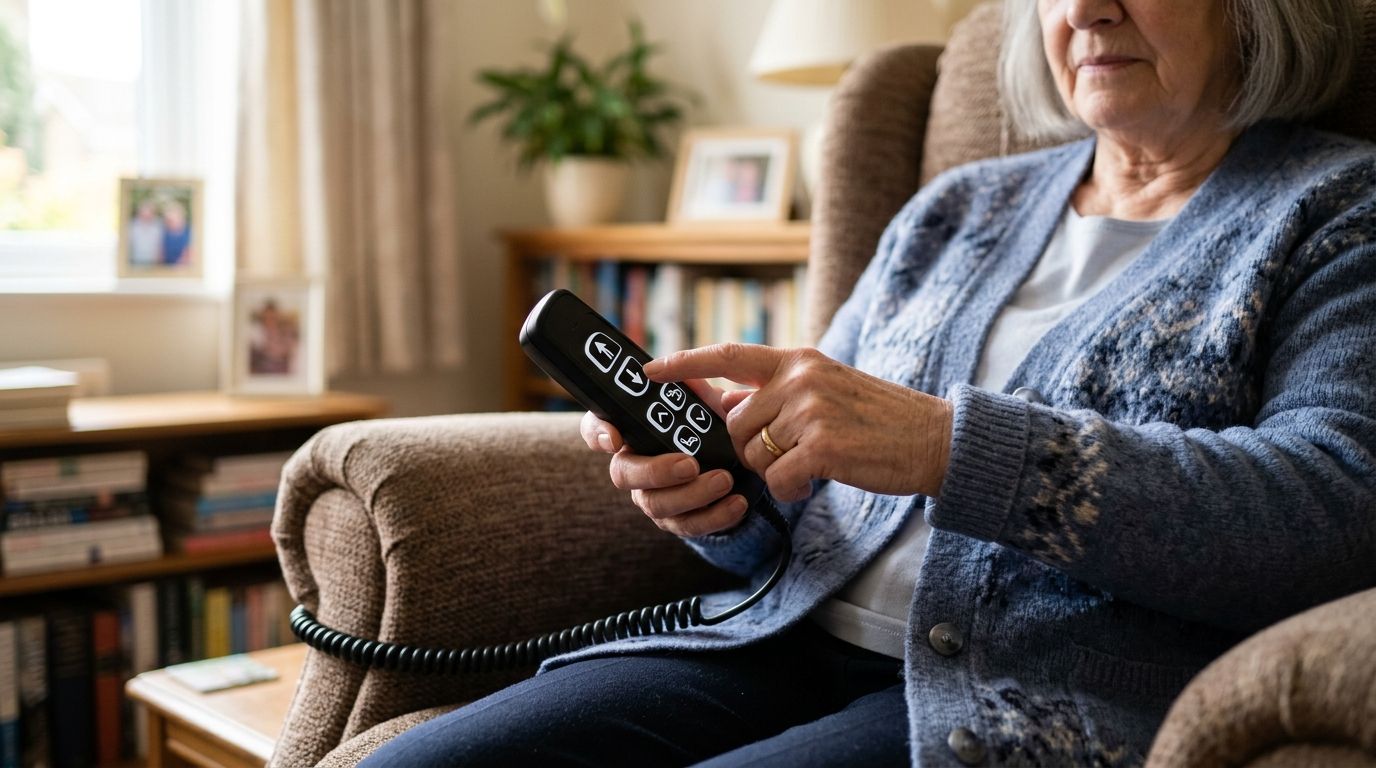
- Look for a power lift recliner that tilts the entire seat forward rather than just reclining
- Check the weight capacity against your own weight with margin, not right at the limit
- Prioritize a wide, stable base over a sleek profile — stability beats style here
- Confirm the remote is simple: large buttons, not a multi-function panel that's hard to read
- Read lift chairs for balance disorders and fall prevention if dizziness or vertigo is part of the picture


Wear a way to call for help
A phone across the room does nothing for you on the bathroom floor. This is the single biggest gap for seniors living alone, and it's solved with something worn, not something stored in a drawer.
- Choose a wearable medical alert with fall detection, not just a manual button
- Wear it in the shower — most falls that go unreported happen there
- Test the range from every room, including the basement and garage if you use them
- Set up a backup contact who gets notified if the primary contact doesn't answer
- Charge it on a fixed schedule so it's never dead when you need it
Keep your legs and balance strong
Equipment reduces risk. Strength reduces how often you need it to.
- Do sit-to-stand practice from a firm chair, 5-10 reps, once a day
- Walk daily, even short distances, to maintain gait and balance
- Ask a doctor about a referral to physical therapy for balance-specific exercises
- Review medications with a pharmacist — several common prescriptions cause dizziness as a side effect
- Get vision checked annually; uncorrected vision is an underrated fall cause
Set a check-in routine with family or a neighbor
This costs nothing and catches what equipment can't: the day something feels different.
- Set a fixed daily call or text time with a family member
- Arrange a spare key with a trusted neighbor for emergencies
- Post emergency numbers somewhere visible, not just saved in a phone
- Tell one person your daily routine so a missed check-in triggers action
Comparing fall prevention options for seniors living alone
| Option | Best for | Key benefit | Key limitation |
|---|---|---|---|
| Grab bars & non-slip mats | Bathroom and shower falls | Installs in an afternoon, nothing to charge or maintain | Doesn't help once you're already on the floor |
| Wearable medical alert | Falls anywhere in the home | Calls for help even if you can't reach a phone | Only works if it's actually worn, not left on a nightstand |
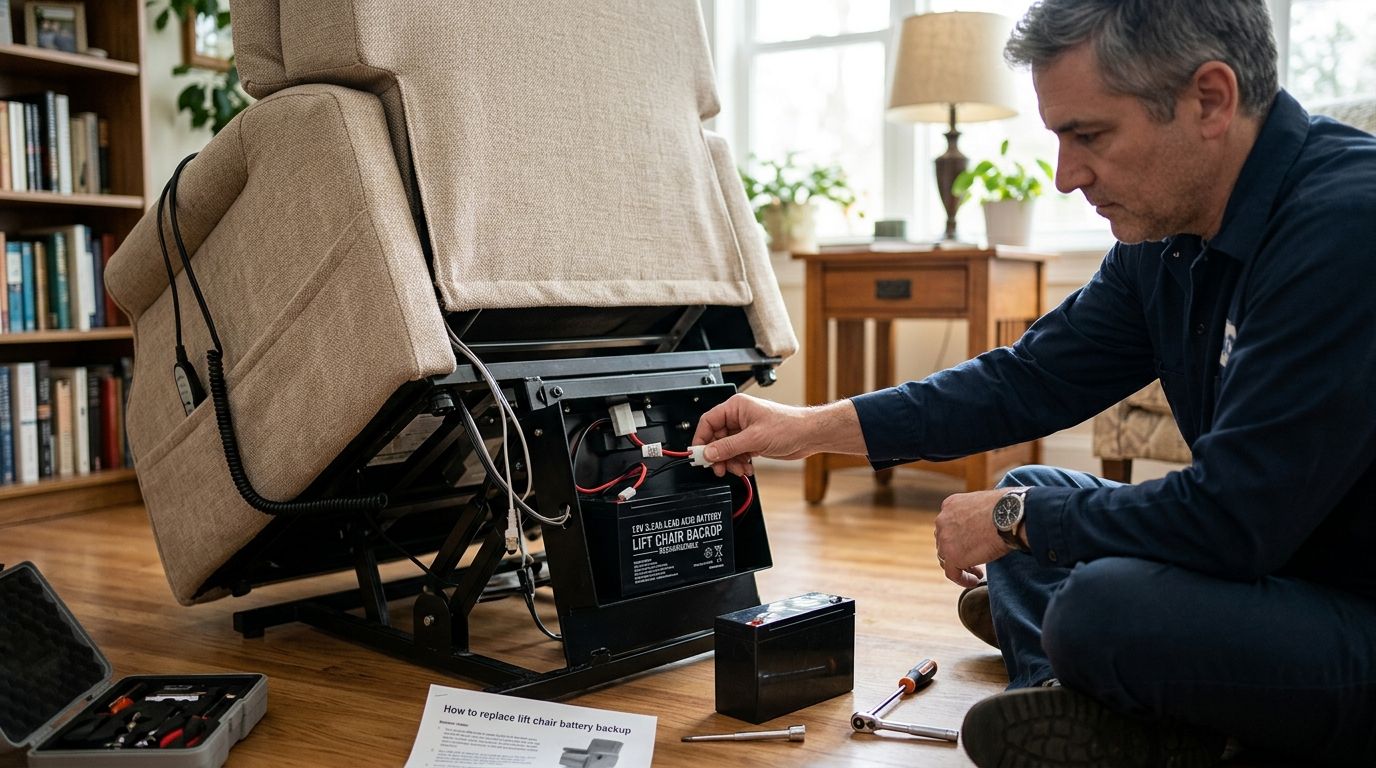
| Power lift recliner | Seniors who struggle to push up from a low seat | Tilts you forward onto your feet instead of off them | Needs an outlet and occasional motor maintenance |
| Home safety audit (OT visit) | Anyone unsure where the real risks are | Flags hazards you've stopped noticing after years in the house | Requires scheduling, not an instant fix |
“Sit in your favorite chair and try to stand without using your hands. If you can't, that chair is a fall risk you've been living with for years.”
Common mistakes seniors living alone make
- Skipping the bathroom because "I've never fallen there." Wet tile and a hard edge are the most common combination behind reported falls, even for people who've never had a close call.
- Buying a medical alert and leaving it charging by the bed. A device that isn't worn during the shower or the yard doesn't help during the moments it's needed most.
- Choosing a recliner based on fabric and price instead of the lift mechanism. A chair that requires two or three pushes off the armrest to stand is a fall risk disguised as furniture.
- Trusting a rug labeled "non-slip" without testing it. Labels vary widely; a rug that grips hardwood can still slide on tile.
- Waiting for a fall before asking for a home safety check. In 2026 an occupational therapist home visit is one of the few fall-prevention steps that's proactive instead of reactive.
FAQ
What are the best fall prevention aids for seniors living alone?
The core aids are bathroom grab bars, better hallway and stairwell lighting, a wearable medical alert with fall detection, and a power lift recliner for safer standing. Start with the free fixes — lighting and clutter — before buying equipment.
Do power lift chairs actually prevent falls?
A power lift recliner reduces fall risk during the sit-to-stand transition by tilting the seat forward instead of requiring you to push off the armrests. It doesn't eliminate other fall causes like wet floors or poor lighting.
How much does it cost to fall-proof a home?
Basic fixes like clearing pathways and adding night lights cost close to nothing. Equipment like grab bars or a lift chair adds cost on top, and the total depends entirely on what your home already has in place.
Is a medical alert device necessary if I live alone?
Yes, if no one checks on you daily, a wearable medical alert with fall detection is the only aid on this list that calls for help automatically. Grab bars and lift chairs reduce fall risk but don't respond after a fall happens.
What causes most falls in the bathroom?
Wet, hard surfaces combined with a lack of something sturdy to hold onto during transfers in and out of the shower or off the toilet. Grab bars rated for body weight address this directly; towel bars do not.
Can a recliner increase fall risk instead of reducing it?
Yes, a recliner that's too low, too soft, or requires multiple pushes off the armrest to stand can increase fall risk over time. A power lift mechanism removes that strain by doing the standing motion for you.
How often should seniors living alone get a home safety check?
An annual walk-through, plus a re-check after any health change like a new medication or a recent hospital stay, catches most new hazards. A formal occupational therapist visit is worth requesting after any fall, even a minor one.
What's the difference between a lift chair and a regular recliner for fall prevention?
A lift chair uses a motor to tilt the entire seat forward until you're standing, while a regular recliner only reclines and still requires you to push yourself up. For someone living alone, that difference is the fall-prevention value.
One last thing
Test your current chair before you test anything you're thinking of buying: sit down, cross your arms, and try to stand without using your hands. If you can't, that's the single clearest fall-risk signal in your house, and it's free to check in 2026 before spending anything on new equipment.