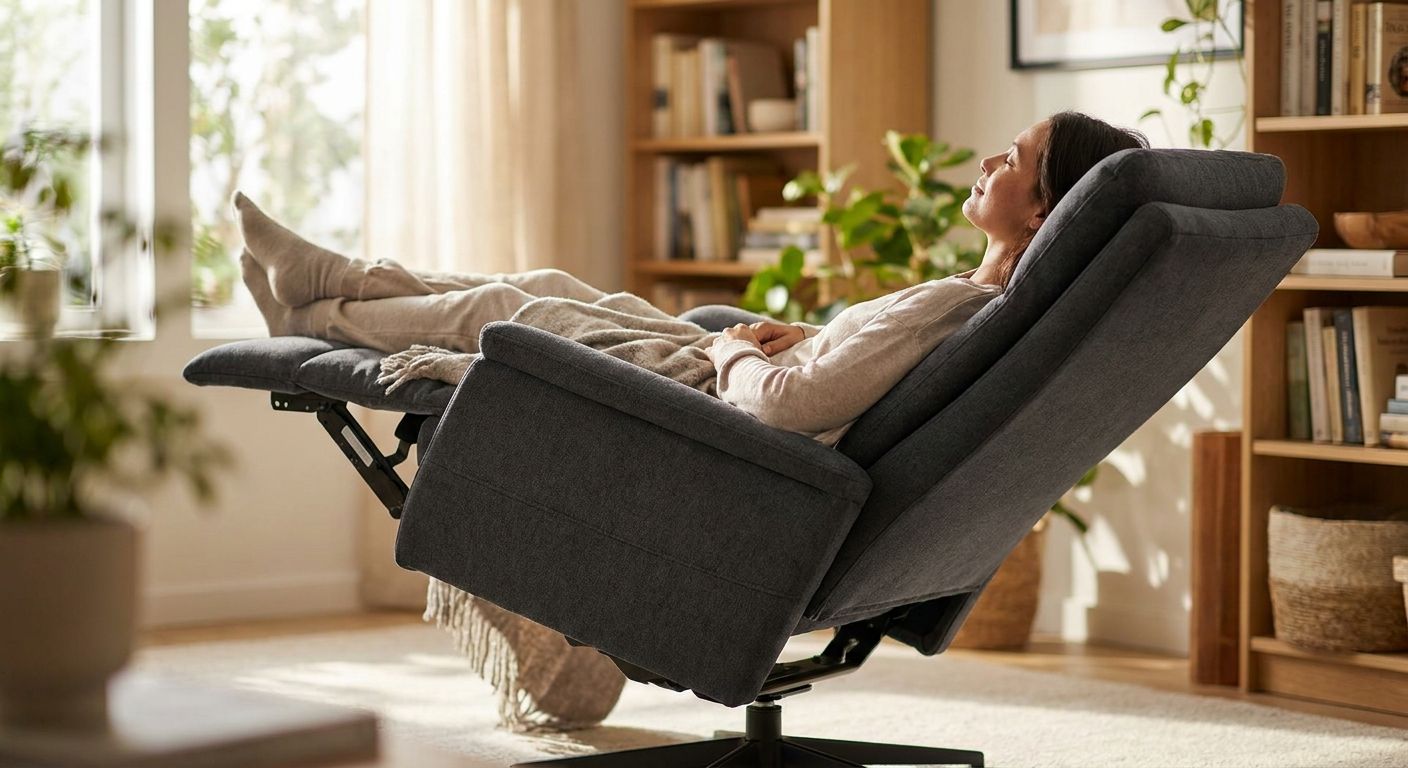
Reclining into a zero gravity position takes weight off your hips, knees, and lower back by shifting your legs above heart level and distributing your body weight evenly along the spine instead of concentrating it on the tailbone and lumbar discs. The catch: not every chair marketed as "zero gravity" actually locks into the neutral body posture angle that produces this effect, so the joint-pain benefit depends on how far the chair reclines and how well it supports your lower back at that angle.
- Zero gravity recliner joint pain relief comes from elevating legs above heart level near a 128-degree torso-to-thigh angle.
- Power zero gravity recliners hold any angle precisely; manual models lock into 2-3 fixed positions.
- Chairs with weak lumbar support at full recline can still leave joints under strain even in a zero gravity position.
- Heat and massage add-ons target muscle tension around joints but don't change the angle math.
- In 2026, buyers with arthritis or spinal stenosis generally do better with motorized angle control.
Why this matters
Joint pain from arthritis, spinal stenosis, or hip and knee replacements gets worse the longer weight sits directly on compressed cartilage or a load-bearing disc. A standard recliner tilts your back but keeps your legs at or below heart level, so hips and lower spine keep carrying most of your body weight even when you're "relaxing."
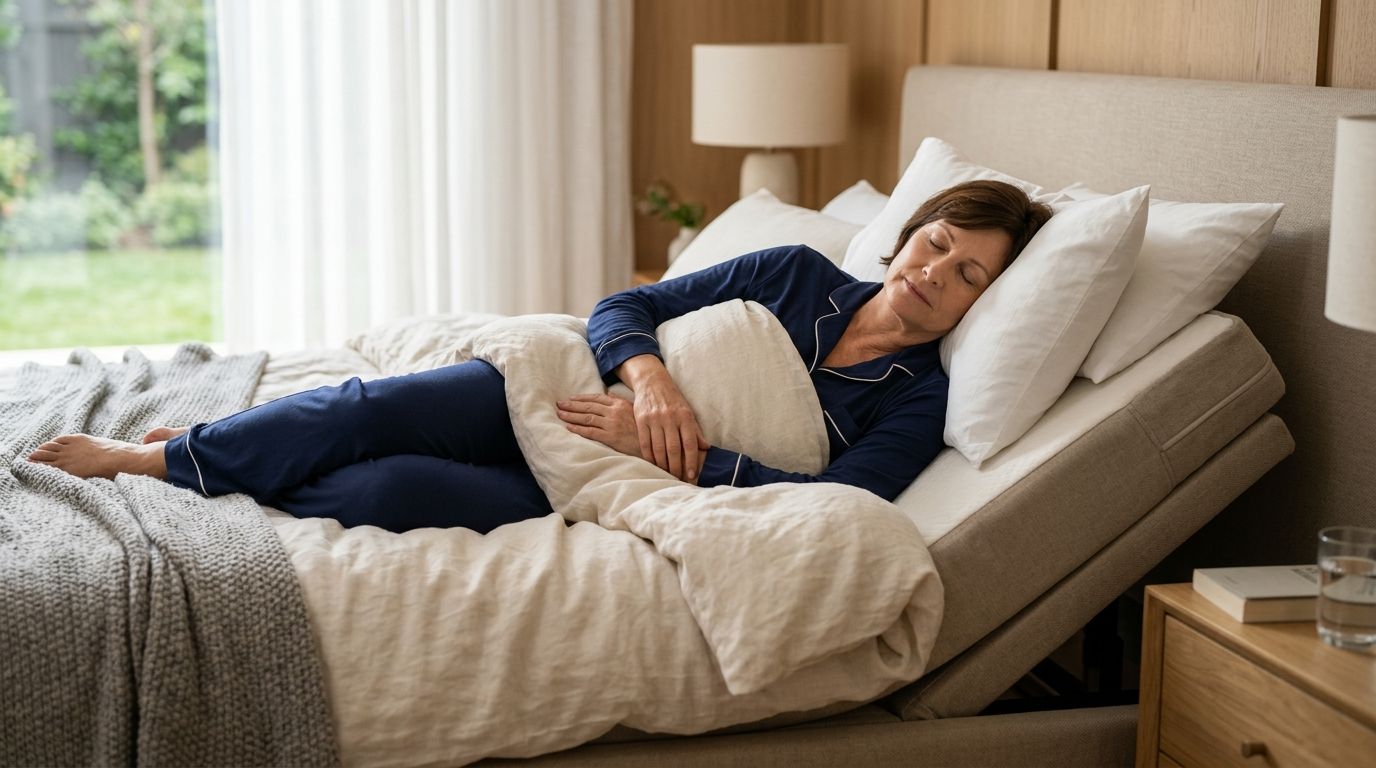
A properly designed zero gravity recliner for lower back pain relief changes that math by raising your legs and reclining your torso together, so gravity pulls your weight into the chair frame instead of your joints. That's the mechanical reason this seating position shows up so often in physical therapy and home-recovery guidance in 2026.
How a zero gravity recliner reduces joint strain
The effect depends on three things happening at once: leg elevation above heart level, an open hip angle instead of a sharp 90-degree seated bend, and lumbar contact that doesn't leave a gap at the base of your spine.
| Recliner type | Recline control | Best for | Trade-off |
|---|---|---|---|
| Power zero gravity recliner | Motorized, stops at any angle including near neutral body posture | Arthritis, spinal stenosis, frequent position changes | Needs a power outlet, higher upfront cost |
| Manual zero gravity recliner | Push-back mechanism, locks into a small number of fixed positions | Budget buyers, occasional use, no heat/massage needed | Less precise angle, more physical effort to recline |
Verdict: power models win on joint pain relief precision; manual models are a reasonable Hold if cost is the deciding factor.
The 128-degree recline angle and why it matters for joints
The angle most often cited for reduced spinal load in a reclined position sits around 128 degrees between the torso and thighs — a figure that traces back to NASA's neutral body posture research for astronauts. At that angle, the lower back flattens against the seat back instead of arching, which takes direct pressure off compressed lumbar discs and hip joints.
A chair that only reclines to a shallow 150-160 degree flat-back position without lifting the legs isn't delivering the same joint relief, even if it's labeled zero gravity. Check the recline range before buying, not just the marketing name.
Power zero gravity recliners: motorized recline for exact positioning
Power models use a motor to move the footrest and backrest together, letting you stop at the exact angle that relieves pressure on a specific joint — a hip replacement site, an arthritic knee, or a stenosis-affected lower back. Edward Creation's Nimbus Zero-Gravity Power Recliner has a wall-hugger frame and a powered headrest, useful in a room where the chair sits close to the wall.
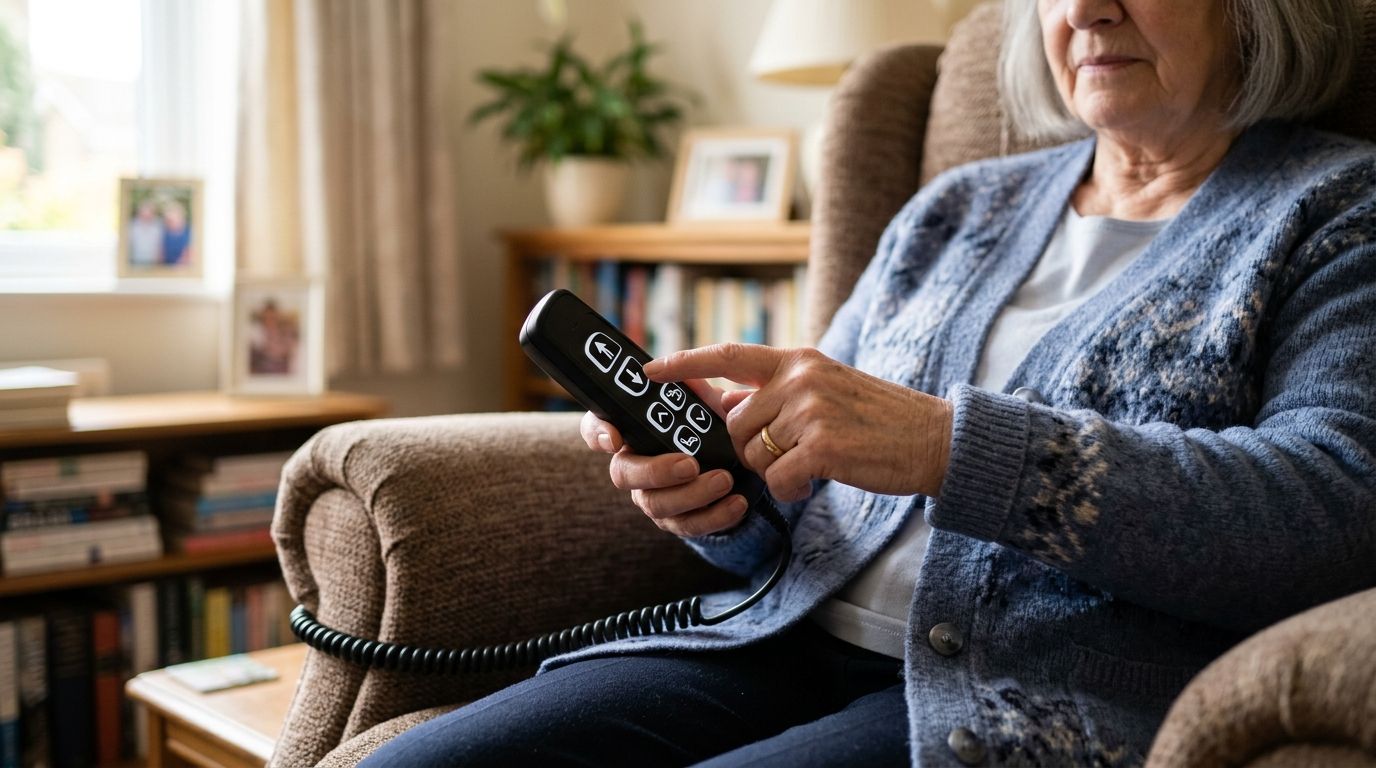
Pros: stops anywhere in the recline range, easier for someone with limited grip or arm strength to operate, often paired with power recliners with heat and massage for added muscle relief around the joint. Cons: depends on a working power outlet, has more moving parts that can eventually need service. Verdict: Buy if joint pain is frequent enough that you'll adjust position daily.
Manual zero gravity recliners: locking positions at a lower cost
Manual chairs use a push-back or lever mechanism instead of a motor. They still achieve the leg-elevated, torso-reclined position, just with fewer stopping points along the way.
Pros: no power dependency, simpler mechanism, fewer parts to fail. Cons: less precise angle control, harder to operate for someone with weak grip strength or recovering from hand or wrist surgery. Verdict: Hold for occasional use; Skip if you need daily fine-tuned positioning for a specific joint.
Why joint pain relief from a zero gravity recliner varies
- Recline angle precision — motorized chairs can stop at the exact angle that unloads a specific joint; fixed-position chairs can't.
- Lumbar support quality — a gap at the small of the back at full recline reintroduces strain even in a zero gravity position.
- Heat and massage features — these ease surrounding muscle tension but don't replace correct positioning for the joint itself.
- Underlying condition — arthritis, spinal stenosis, and post-surgical hip or knee pain each respond differently to leg elevation and hip angle.
- Frequency of use — someone sitting for hours daily needs a chair built for repeated position changes, not an occasional-use model.
- Chair fit — a seat too narrow or too shallow forces awkward posture that cancels out the zero gravity benefit.
Is a zero gravity recliner good for arthritis or joint pain?
A zero gravity recliner is good for arthritis when it lifts the legs above heart level and opens the hip angle, which reduces the load on inflamed joints. Look specifically at chairs built for arthritis and joint pain relief rather than any recliner labeled zero gravity, since not all of them reach the neutral body posture angle.
Does a zero gravity recliner help sciatica and lower back pain?
Yes — elevating the legs and flattening the lumbar curve against the seat back reduces pressure on the discs that irritate the sciatic nerve. The relief lasts only while you're in the position, so it works best as a daily routine rather than a one-time fix.
Is a power or manual zero gravity recliner better for limited mobility?
A power zero gravity recliner is generally better for limited mobility because a motor does the work of shifting into and out of the reclined position. Manual models require enough arm and hand strength to push back against the mechanism, which can be difficult after a hip or shoulder surgery.
FAQ
What angle is a true zero gravity recliner position?
A true zero gravity position reclines to roughly 128 degrees between the torso and thighs, the angle NASA-inspired seating research links to reduced spinal load in 2026 furniture design guidance. Chairs that only recline to a shallow flat-back angle without lifting the legs don't produce the same effect.
Can a zero gravity recliner replace a lift chair for someone recovering from surgery?
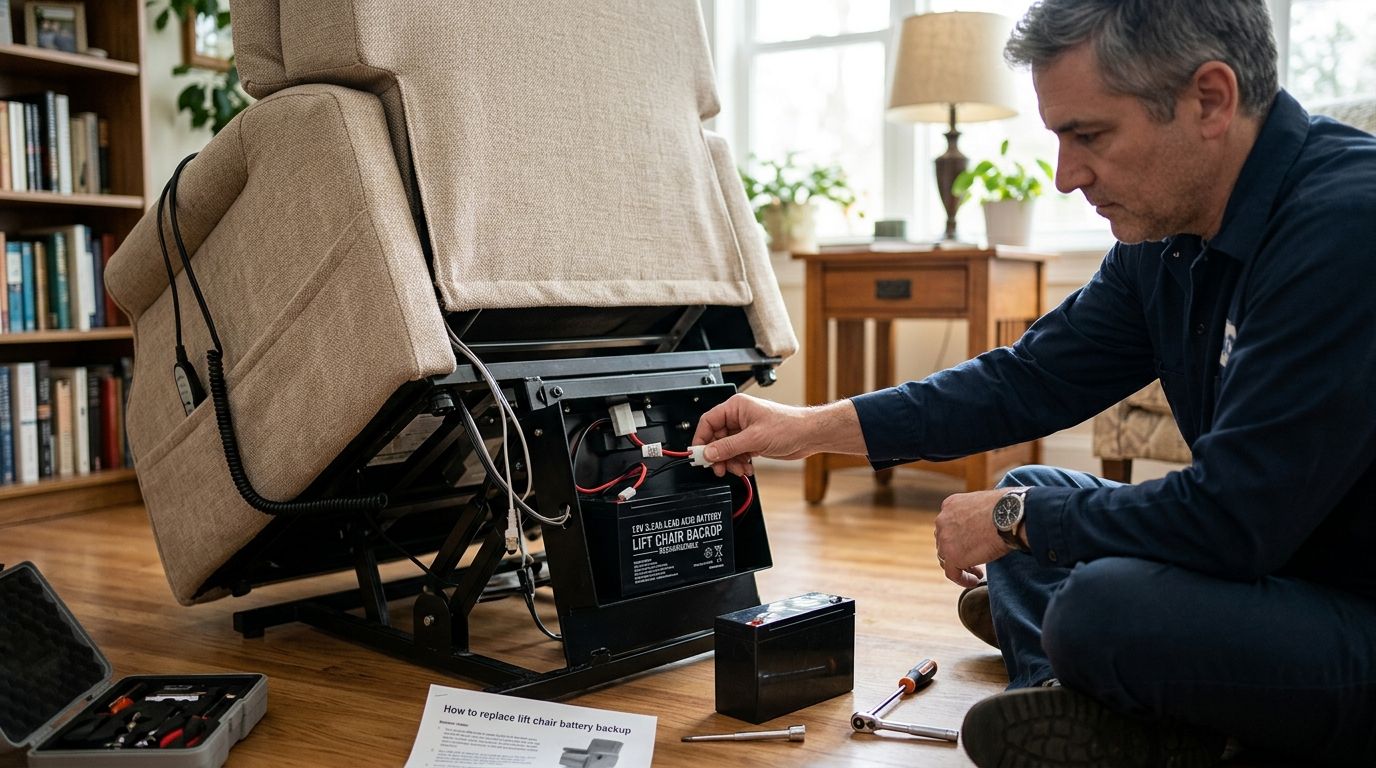
A zero gravity recliner is not a substitute for a lift chair when someone needs powered help standing up, since zero gravity models focus on recline angle rather than a lift-assist motor. For post-surgical recovery that includes trouble standing, a dedicated lift chair is the safer choice.
Does a zero gravity recliner help with hip pain?
A zero gravity recliner helps with hip pain by opening the hip angle and shifting weight off the joint onto the chair frame. The benefit depends on the chair reaching a full recline with leg elevation, not a partial recline.
Are manual zero gravity chairs as effective as power models for joint pain?
Manual zero gravity chairs can reach the same recline angle as power models, but they offer fewer stopping points along the way. For joint pain that needs frequent fine-tuned adjustment, a power model gives more control.
How is a zero gravity recliner different from a regular recliner for back pain?
A zero gravity recliner elevates the legs above heart level while reclining the torso together, flattening the lumbar spine against the seat back. A regular recliner tilts the backrest but usually leaves the legs at or below heart level, so the lower back still carries more weight.
Do heat and massage features on a zero gravity recliner actually reduce joint pain?
Heat and massage features ease muscle tension around a joint but don't change the mechanical benefit of the recline angle itself. They work best combined with correct zero gravity positioning, not as a replacement for it.
Is a zero gravity recliner worth it for spinal stenosis in 2026?
A zero gravity recliner is worth considering for spinal stenosis because the reclined, legs-elevated position opens the spinal canal space that narrows in stenosis. Check chairs built specifically for spinal stenosis and lower back pain rather than generic zero gravity listings.
One last thing
The detail buyers skip most often is checking whether a "zero gravity" recliner actually locks at the reclined angle or just approaches it while you hold pressure on the footrest lever — a chair that slides back out of position mid-nap does nothing for joint strain. Test the lock mechanism, or read the product description closely, before assuming the label alone guarantees the neutral body posture angle in 2026 models.