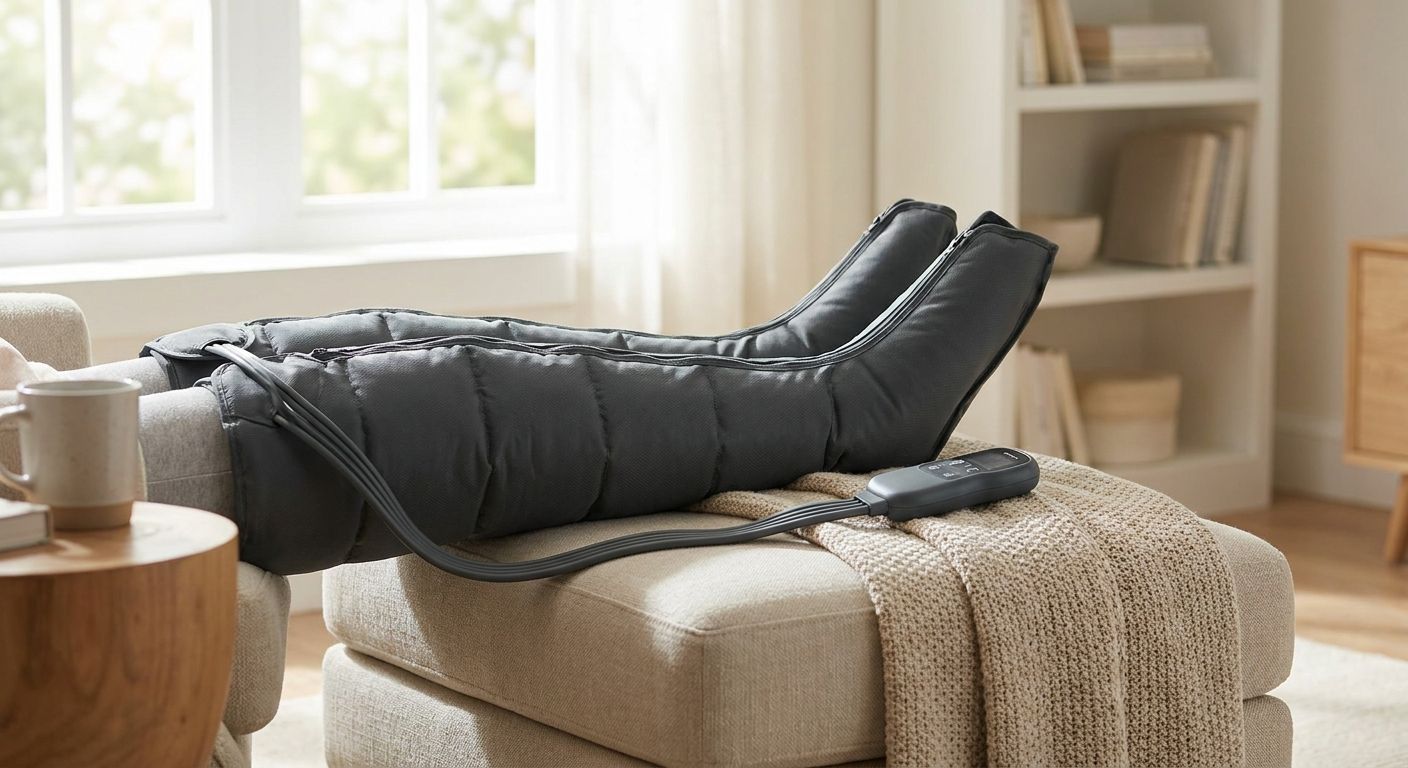
Air compression leg massagers use inflatable chambers wrapped around the foot, calf, and sometimes the thigh to squeeze and release in a rhythmic pattern that pushes blood back toward the heart. This guide breaks down the five main types sold in 2026, matches each one to a specific circulation complaint, and tells you which to skip.
- Full-leg sequential boots are the strongest all-around air compression leg massager for daily use at home in 2026.
- Calf-and-foot sleeves fit restless leg syndrome and nightly routines better than bulkier boot styles.
- Cordless compact units trade pressure range for real portability on flights and car trips.
- Single-zone calf wraps are the cheapest entry point but only cover part of the leg.
Why this matters
Poor circulation in the legs shows up as cold feet, swelling by evening, or a heavy, achy feeling after sitting too long. It's a common complaint for people managing diabetic neuropathy, venous insufficiency, or long stretches recovering in a chair after surgery. Blood that pools in the lower leg instead of cycling back up raises swelling risk and, over months, can change the skin around the ankle.
The underlying idea isn't new. Sequential compression devices have been standard hospital equipment for decades, used to prevent blood clots in patients who can't move around much after surgery. Home air compression leg massagers apply the same squeeze-and-release principle at a smaller scale, and hospital-grade units typically cycle in the 35 to 55 mmHg range for clot prevention, while home wellness devices run gentler settings by design.
The type that helps most for restless leg syndrome is not the type that helps most after a hip replacement, which is why a single "best" pick misses the point.
What makes the best air compression leg massager
- Sequential (multi-chamber) inflation — foot, then calf, then thigh, rather than one squeeze all at once
- Adjustable pressure levels — at least three intensity settings, not a single fixed squeeze
- Real sizing range — fits actual calf and thigh circumference instead of one stretchy size
- Quiet pump motor — matters if it runs nightly next to a bed or during recovery
- Cordless or battery operation — for anyone who wants to use it away from a wall outlet
- Removable, washable sleeves — daily use means daily sweat
At a glance
| Type | Best for | Standout feature | Key limitation |
|---|---|---|---|
| Full-leg sequential boots | Daily circulation support at home | Covers foot, calf, and thigh in one cycle | Bulkier, needs floor space and a stable chair |
| Calf-and-foot sleeves | Restless leg syndrome, nightly use | Lighter, faster to put on before bed | Skips thigh compression entirely |
| Cordless compact unit | Travel and frequent flyers | Battery powered, packs into a bag | Shorter run time before recharge |
| Single-zone calf wrap | Budget option, occasional use | Lowest-cost entry point | One pressure zone, no foot chamber |
| Multi-mode device with heat | Arthritis or joint pain plus circulation | Adds warmth before compression starts | Heat element is another part that can fail |
1. Full-leg sequential boots: best air compression leg massager for daily circulation support at home
Full-leg boots inflate the foot chamber first, then the calf, then the thigh, in a wave that mirrors the hospital sequential compression pattern. For someone spending most of the day in a recliner or lift chair, this is the type that actually addresses the whole leg instead of just part of it.
Full-leg boot pros:
- Covers foot, calf, and thigh in a single 2026-standard cycle
- Multiple pressure settings for different comfort thresholds
- Sequential pattern matches the clinical model used for clot prevention
Full-leg boot cons:
- Bulkier to store than a sleeve
- Louder pump than compact styles
- Needs a stable chair to sit through the full cycle
Best for: seniors or recovering patients who spend hours seated each day. Verdict: Buy if daily circulation support is the actual goal, not occasional relief.
2. Calf-and-foot sleeves: best air compression leg massager for restless leg syndrome and nightly use
Sleeves stop at the knee, skipping the thigh chamber entirely. That trade-off makes them lighter, quieter, and faster to put on solo — which matters for anyone managing restless leg syndrome who wants a routine before bed rather than a production.
Calf-and-foot sleeve pros:
- Quick to put on without help
- Quieter cycle, better for a bedroom
- Lower pressure range that suits nightly use
Calf-and-foot sleeve cons:
- No thigh chamber, so upper-leg circulation goes unaddressed
- Narrower pressure range than full boots
Best for: nightly circulation routines and restless leg symptoms. Verdict: Buy for anyone whose main complaint is evening leg restlessness rather than all-day swelling.
3. Cordless compact unit: best air compression leg massager for travel and frequent flyers
These run on battery power and fold down small enough for a carry-on. The trade-off is obvious: shorter run time and usually one or two pressure levels instead of a full range.
Cordless compact pros:
- No outlet needed on a plane, train, or in a rental car
- Packs into a bag without adding much bulk
Cordless compact cons:
- Shorter run time before recharge
- Fewer pressure levels than plug-in models
Best for: travelers dealing with leg swelling on long flights or drives. Verdict: Buy for its specific niche; skip it as a daily home device.
4. Single-zone calf wrap: best budget air compression leg massager for occasional use
A single-zone wrap squeezes the calf only, with no foot chamber and no sequencing. It's the cheapest way into the category, and it does what it says on the label — nothing more.
Single-zone wrap pros:
- Lowest cost of entry in the category
- Simple single-button operation
- Stores flat in a drawer
Single-zone wrap cons:
- Misses the foot entirely
- Not built for daily, long-term therapy
Best for: mild, occasional calf tightness rather than an ongoing circulation problem. Verdict: Hold — fine for occasional use, skip it if a doctor has flagged daily circulation therapy.
5. Multi-mode device with heat: best air compression leg massager for arthritis or joint pain alongside circulation
This type layers a heat element on top of standard compression, warming stiff joints before the squeeze cycle starts. It's a narrower use case than the other four — useful specifically when arthritis and poor circulation show up together.
Multi-mode with heat pros:
- Warmth loosens stiff joints before compression begins
- Several intensity modes beyond plain squeeze-and-release
Multi-mode with heat cons:
- Heat element is an added part that can fail
- Typically costs more to service than a simple sleeve
Best for: users managing arthritis or joint pain alongside circulation concerns. Verdict: Buy for that specific combination; skip it if heat isn't part of the actual problem.
“If your legs still feel tight after twenty minutes on the lowest setting, the device is undersized for your calf circumference.”
How we ranked these
Each type was scored against the six criteria above — sequential coverage, pressure range, sizing accuracy, motor noise, portability, and sleeve cleaning — and matched to the use case where it wins outright rather than competes. That's why the list reads as five separate answers instead of five contenders for the same title.
Which air compression leg massager should you choose?
For most people managing everyday poor circulation in 2026, full-leg sequential boots are the default pick — they cover the whole leg and follow the same pattern hospitals use for clot prevention. Swap to calf-and-foot sleeves if restless leg syndrome is the main complaint and daily comfort at bedtime matters more than thigh coverage. Pick the cordless compact unit only if travel is the actual use case, not as a substitute for a real home routine.
If standing up right after a compression cycle ever feels unsteady, treat that as a safety flag rather than something to push through — pairing a circulation routine with basic fall-prevention checks around the house matters more than which massager sits under the recliner. Anyone with a history of blood clots or active DVT should talk to a doctor before starting daily use, since that's a standard contraindication for sequential compression therapy of any kind.
FAQ
What is the best air compression leg massager for poor circulation in 2026?
Full-leg sequential boots are the strongest default choice because they compress the foot, calf, and thigh in one cycle. Calf-and-foot sleeves work better specifically for restless leg syndrome or nightly routines.
Is an air compression leg massager the same as a compression stocking?
No. Compression stockings apply steady, constant pressure and are classified in tiers such as 15-20 mmHg and 20-30 mmHg, while an air compression leg massager inflates and deflates chambers in cycles rather than squeezing continuously.
How much pressure should an air compression leg massager use?
Most home units offer adjustable levels from gentle to firm rather than a fixed number. Hospital-grade sequential compression devices used for clot prevention run around 35 to 55 mmHg, but home wellness use is typically set gentler than that.
Can you use an air compression leg massager every day?
Daily use is common for people managing chronic circulation issues, but anyone with a history of blood clots or active DVT should check with a doctor first since that's a standard contraindication for compression therapy.
Are air compression leg massagers covered by FSA or HSA?
Many devices qualify for FSA or HSA reimbursement, though coverage depends on the specific plan and sometimes requires a letter of medical necessity. Check with the plan administrator before assuming eligibility.
What's the difference between full-leg boots and calf sleeves?
Full-leg boots compress the foot, calf, and thigh in sequence, while calf-and-foot sleeves stop at the knee. Boots cover more of the leg; sleeves are lighter and faster to use nightly.
Do air compression leg massagers help with restless leg syndrome?
Many users report that rhythmic compression eases the urge to move the legs at night, though it isn't a cure. Calf-and-foot sleeves are the type best suited to this specific use.
How do I know what size air compression leg massager to buy?
Measure calf circumference at its widest point before ordering rather than guessing from shoe size or height. An undersized sleeve compresses unevenly and can feel like a tourniquet at the top of the cycle.
One last thing: an air compression leg massager sized wrong for the calf does the opposite of what it promises. Instead of moving blood, an oversized or undersized sleeve can dig into the skin at the top of the inflation cycle and act like a tourniquet rather than a pump. Measure calf circumference at the widest point before ordering, not after the box arrives in 2026.