A power lift recliner needs a weekly wipe-down and a monthly deep clean to keep the upholstery, frame, and motor working past the five-year mark. The part most owners skip — vacuuming the seat track and hinge points where crumbs and pet hair collect — is the same spot that causes motor strain and squeaking by year two.
- Wipe a power lift recliner weekly and deep clean upholstery monthly to stop 2026 wear-and-tear buildup.
- Vacuum seat crevices and hinge points before wiping; trapped debris strains the lift motor over time.
- Leather needs a pH-balanced cleaner and conditioner twice a year; fabric needs a fabric-safe upholstery spray.
- Always unplug the recliner before cleaning near the motor housing, remote port, or power cord.
- A monthly maintenance routine adds years to a power lift recliner more than reactive spot cleaning does.
Why this matters
A power lift recliner isn't just upholstery over a frame — it has a motor, a gearbox, and wiring running through the base. Liquid, dust, and pet hair that would just look bad on a regular chair can jam the lift mechanism or corrode a connector on a power lift recliner. Skipping maintenance doesn't just shorten the fabric's life — it's the most common reason lift chairs get serviced before their motor warranty runs out. Get the routine right and the same chair keeps lifting smoothly well past 2026 and into the years after.
How do you clean a power lift recliner?
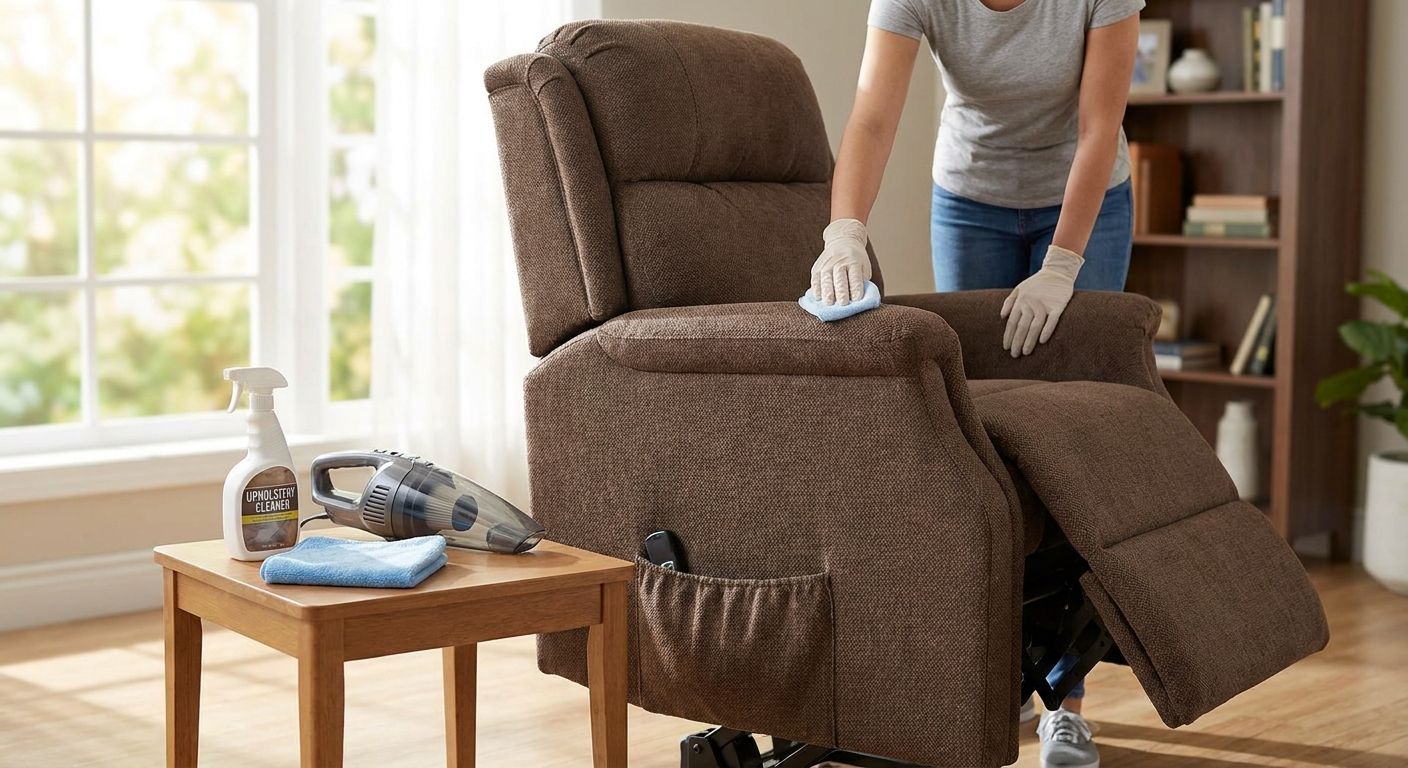
Cleaning a power lift recliner takes five steps done in order, and skipping the unplug step is the mistake that causes the most damage.
- Unplug the recliner before you touch the motor housing, remote cradle, or power cord. Water or cleaner near a live connector is the fastest way to short a lift motor.
- Vacuum the seams, crevices, and base with a brush attachment. This is the step most owners skip, and it's where crumbs and pet hair build up around the reclining mechanism.
- Wipe the upholstery with a cloth suited to the material — a damp microfiber cloth with mild soap for fabric, a dedicated leather cleaner for leather. Never soak the fabric; moisture that seeps into the padding takes days to dry and can mildew.
- Clean the frame and base with a dry or barely damp cloth, focusing on the footrest hinges and the area under the seat where the motor sits.
- Let everything air-dry completely before plugging the recliner back in. Even a small amount of residual moisture near the power cord connector is a shock risk.
| Step | Frequency | Tool |
|---|---|---|
| Vacuum crevices | Weekly | Brush attachment |
| Wipe upholstery | Weekly (fabric) / Every other week (leather) | Microfiber cloth |
| Deep clean upholstery | Monthly | Fabric-safe cleaner or leather cleaner |
| Condition leather | Twice a year | Leather conditioner |
| Check motor and battery contacts | Every 3 months | Dry cloth |
Leather power lift recliners: clean weekly, condition twice a year
Leather holds up better against spills than fabric, but it dries out and cracks without conditioning. Wipe leather weekly with a barely damp cloth and a pH-balanced leather cleaner — never a household all-purpose spray, which strips the finish. Condition the leather twice a year, roughly every six months, to keep it from stiffening around the seams where the chair flexes most during a lift cycle.
Verdict: leather is the lower-maintenance material week to week, but it's the one that punishes neglect the hardest — cracked leather on a recliner arm is a repair job, not a cleaning job.
Fabric power lift recliners: vacuum weekly, deep clean monthly
Fabric upholstery traps dust and allergens faster than leather, which is why weekly vacuuming matters more here. Spot-clean spills immediately with a fabric-safe upholstery cleaner and blot rather than rub — rubbing pushes the stain deeper into the padding. Once a month, do a full pass with an upholstery cleaner over the whole seat, back, and armrests, not just visible spots.
Verdict: fabric needs more frequent attention but tolerates a wider range of cleaning products, which makes it the more forgiving choice for households that clean on a schedule rather than as-needed.
Why lift recliner maintenance varies
How often a power lift recliner needs cleaning and servicing depends on a handful of factors:
- Daily use hours — a chair used 6+ hours a day needs weekly attention versus monthly for occasional use
- Pets in the house — pet hair and dander clog the reclining mechanism faster than dust alone
- Upholstery material — leather and fabric have different cleaning schedules and product requirements
- Sun exposure — direct sunlight fades and dries out upholstery faster, especially leather
- Humidity levels — high humidity slows drying time after cleaning and raises mildew risk
- Weight capacity and frequency of use — chairs used by caregivers moving a family member in and out multiple times a day see more mechanical wear at the base and hinges
When to replace parts instead of cleaning them
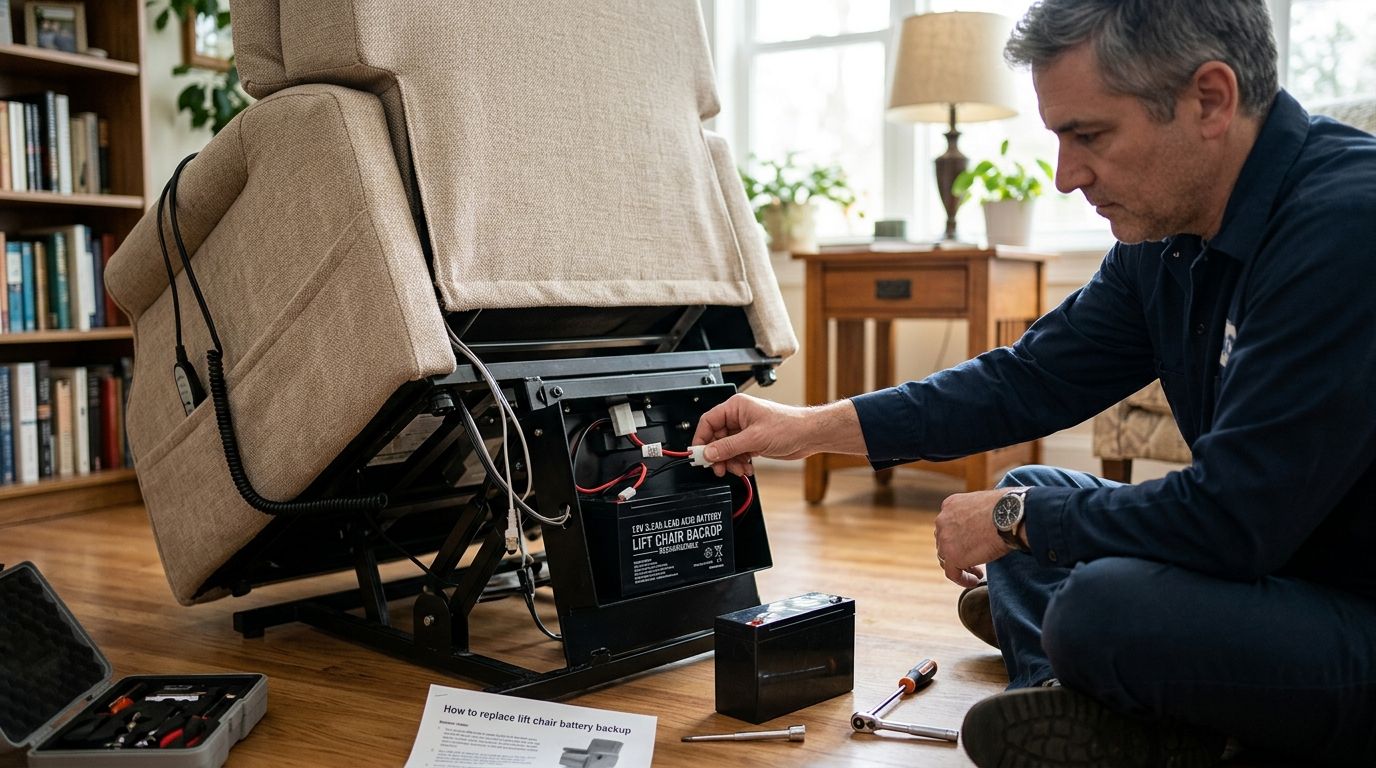
Cleaning solves surface wear, but some issues need a part swap. A recliner that loses power mid-recline, or won't hold charge during a power outage, usually points to the battery backup rather than the upholstery. If the chair squeaks or catches after a thorough cleaning and vacuuming, the mechanism itself — not the fabric — is the problem, and that's a service call, not a spray bottle fix.


FAQ
How often should you clean a power lift recliner?
Vacuum a power lift recliner weekly and deep clean the upholstery monthly. Fabric needs more frequent attention than leather because it traps dust and pet hair faster.
Can you use a steam cleaner on a power lift recliner?
Skip steam cleaners on a power lift recliner — the heat and moisture can damage the motor, wiring, and foam padding near the base. Use a fabric-safe or leather-safe cleaner applied with a cloth instead.
What cleaning products should you avoid on a power lift recliner?
Avoid household all-purpose sprays, bleach, and ammonia-based cleaners on any power lift recliner upholstery. These strip leather finishes and can discolor fabric, and they're never safe near the motor housing or power cord.
Do you need to unplug a power lift recliner before cleaning it?
Yes, unplug a power lift recliner before cleaning near the motor housing, remote cradle, or power cord. Water or cleaner reaching a live connector is the most common cause of shorted lift motors.
How do you remove pet hair from a power lift recliner?
Vacuum a power lift recliner weekly with a brush attachment, focusing on seams and the base near the reclining mechanism. A rubber pet-hair brush or lint roller works between vacuum sessions on fabric upholstery.
Does cleaning a lift recliner void the warranty?
Cleaning a lift recliner with the manufacturer-recommended products does not void the warranty, but using unapproved chemicals near the motor or wiring often does. Check the warranty terms for the specific cleaner restrictions before using anything beyond mild soap and water.
How do you clean the base and motor area of a power lift recliner?
Wipe the base and motor area of a power lift recliner with a dry or barely damp cloth after unplugging it, and never spray cleaner directly into the mechanism. Vacuuming this area monthly prevents dust buildup that can strain the motor.
One last thing
The step that shortens a power lift recliner's life fastest isn't skipping the deep clean — it's cleaning around the motor without unplugging first. A damp cloth near a live connector doesn't always cause an immediate short; sometimes corrosion builds for months before the chair stops responding to the remote. Build the unplug step into the routine every single time, not just for spills, and the mechanical side of the chair will outlast the upholstery by years.