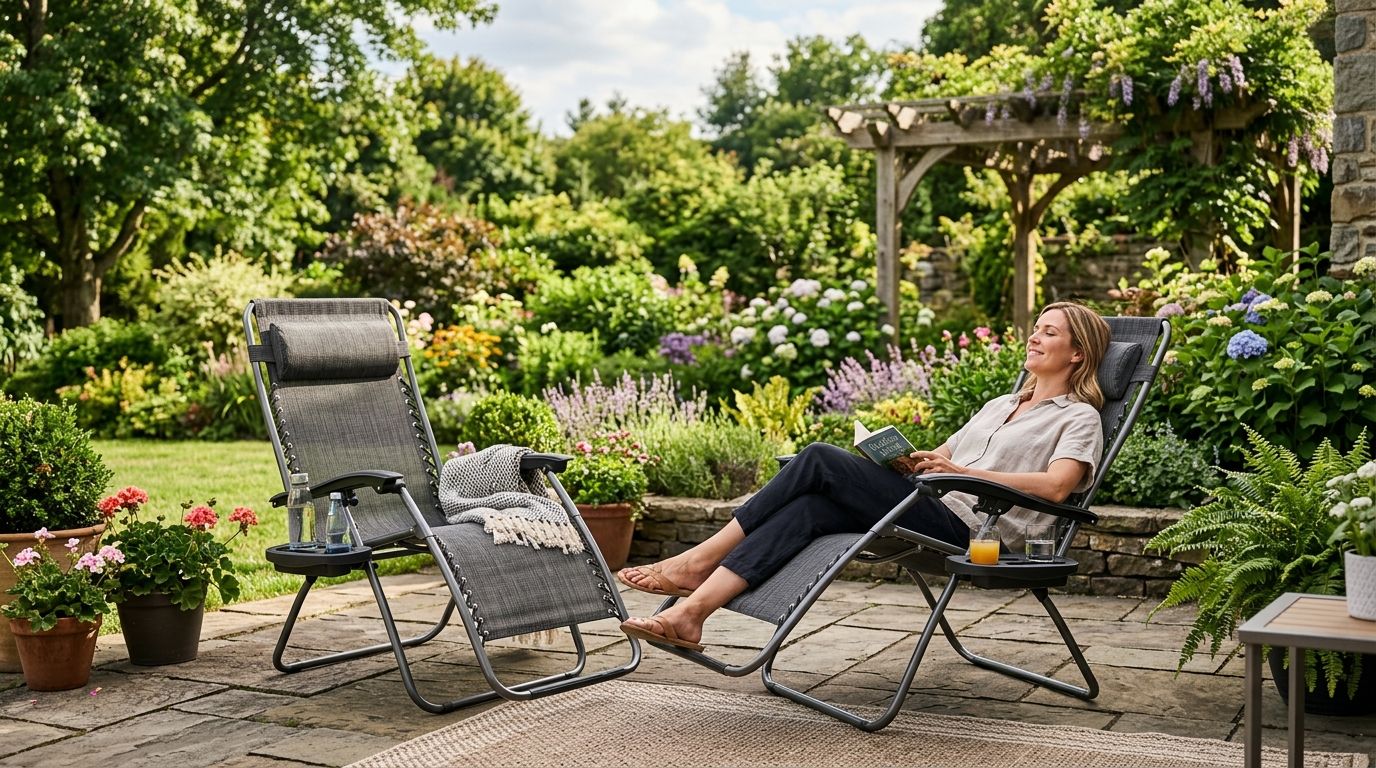
A zero gravity recliner for patio use tilts your body so hips sit slightly above heart level, taking weight off the lower back, knees, and hips while you sit outside instead of in the living room. Seniors and mobility-impaired shoppers need something different from a standard patio lounger: a frame that won't corrode after one humid summer, a recline lock that won't slip on uneven pavers, and a weight capacity that's stated up front, not buried in a spec sheet.
- A zero gravity recliner for patio use needs a rust-resistant frame and UV-stable strapping, not just a good recline angle.
- Manual zero gravity patio chairs suit most seniors; power recline models belong indoors near an outlet in 2026.
- Weight capacity and locking recline positions matter more outdoors than indoors because patio surfaces are uneven.
- Fabric that isn't UV-rated fades and cracks within one Southern summer season.
Why zero gravity recliners matter for outdoor patio users
Patio seating gets harder use than living room furniture. It sits in direct sun for six to ten hours a day in warmer months, takes on dew and humidity overnight, and gets moved across concrete or uneven pavers more often than an indoor chair ever would. For someone recovering from a hip or knee procedure, or managing chronic lower back pain, a chair that wobbles when they lean back to sit down is a fall risk, not a comfort upgrade.
The recline angle that eases lower back pain indoors works the same way outdoors — the zero gravity recliners for lower back pain relief mechanics don't change with the setting. What changes is everything around that mechanism: the materials, the base stability on grass or stone, and how the chair holds up to weather nobody indoors has to think about. That's the gap most patio buying guides skip, and it's exactly where a mobility-focused shopper gets burned.
Update your frame material checklist
Start here before you look at fabric colors or cushion thickness. A frame that corrodes in one season means replacing the whole chair, not just a cover.
- Choose powder-coated aluminum or galvanized steel over untreated steel — it resists rust in humid climates
- Check the weld points on folding models; stamped joints crack faster than welded ones
- Confirm the frame is rated for outdoor use specifically, not just "indoor/outdoor friendly" marketing language
- Ask whether the recline mechanism is enclosed or exposed — exposed gears collect grit and seize up
- Look for a stated weight capacity on the product page, not just "heavy duty" in the description
Measure your patio surface before you buy
A zero gravity recliner locks its widest footprint when reclined. If your patio has a step down, a slope, or loose gravel, the base needs a wider stance than a flat concrete slab requires.
- Measure the flattest 3-foot by 6-foot section of your patio, not the total square footage
- Check for a level base — most zero gravity frames need under a 2-degree slope to lock safely
- Leave 18 inches of clearance on the recline side for the frame to extend
- Test the chair folded and unfolded if you plan to store it seasonally
Test the weight capacity and recline lock
This is the step where mobility needs diverge most from general patio shopping. A recline lock that slips under body weight is the single most common complaint buried in return reasons for outdoor loungers.
- Sit and recline fully before buying if you can test in a showroom
- Confirm the stated capacity with a 20-30 lb margin above your actual weight, not a tight fit
- Prefer a ratchet-style lock over a pin-and-notch system — ratchets hold position more reliably outdoors
- Ask if the lock engages automatically or needs a manual pull, since manual pulls are harder with arthritis or limited grip strength
- Check that the armrests can bear weight for a push-up transfer, since many users stand up using the arms, not the footrest
Choose manual vs. power recline for outdoor use
Manual zero gravity chairs are the simpler, more weather-tolerant option for most patios in 2026 — no wiring, no battery to protect from moisture, no motor to fail after a rainy week.
- Manual recline: no power needed, works anywhere on the patio, lowest long-term failure point
- Power recline: easier for limited grip strength or shoulder pain, but needs a covered outlet and weatherproof cord management
- Hybrid gas-assist recline: splits the difference — smoother than pure manual, no electronics to protect
- If power recline is non-negotiable for your mobility needs, keep the chair under a covered porch, not open patio
For a manual option built around a lower price point, the manual zero gravity chairs for small budgets guide breaks down what you give up moving away from power recline — mainly convenience, not durability.
Add fall-prevention features before the first use
Outdoor surfaces are less forgiving than carpet. A chair that's perfectly stable on a showroom floor can shift on pavers with a slight grade.
- Add non-slip rubber feet or pads under each leg if the chair ships with bare metal or plastic feet
- Place the chair on a level paver or concrete section, never directly on grass or gravel that shifts under weight
- Use a side table within arm's reach so you're not leaning past the armrest to grab a phone or water glass
- Practice the sit-to-stand transfer once with a second person nearby before using the chair unsupervised
Joint strain doesn't disappear just because the chair is outdoors — the same mechanics that help indoors apply here, and the how to reduce joint strain with a zero gravity recliner guide covers positioning details that carry over directly to patio use.
Protect the fabric from sun and moisture
UV exposure is the number one reason patio furniture fabric fails early. Standard indoor upholstery, even on a well-built frame, degrades fast outdoors.
- Choose solution-dyed acrylic or marine-grade mesh fabric, not indoor polyester blends
- Store cushions or covers indoors during off-season months if the fabric isn't fully weather-rated
- Wipe down the frame and fabric monthly during peak season to prevent mildew buildup in humid climates
- Check for a removable, washable cushion cover — it extends usable life by several seasons
Comparison: patio zero gravity chair options for 2026
| Option | Best for | Recline type | Key limitation |
|---|---|---|---|
| Manual sling zero gravity chair | Budget-conscious seniors, dry climates | Ratchet lock, manual | No power assist for standing |
| Gas-assist zero gravity lounger | Users with mild grip or shoulder limits | Gas-spring, smoother manual | Higher cost than pure manual |
| Power recline patio chair | Users needing full power assist outdoors | Motorized, needs outlet | Requires covered, dry power access |
| Repurposed indoor power recliner | Covered porches only, not open patio | Motorized | Not weather-rated for direct sun or rain |
Verdict: a manual or gas-assist zero gravity recliner is the safer patio pick for most seniors in 2026 — power recline belongs on a covered porch with protected wiring, not an open patio.
Common mistakes patio buyers make
- Buying an indoor recliner and calling it patio-ready. Indoor fabric and untreated frames fail within one season of direct sun and rain.
- Skipping the weight capacity check. A chair rated below actual body weight strains the recline lock and voids most stability claims.
- Placing the chair on grass or gravel. Zero gravity frames need a stable, level base to lock the recline position safely.
- Ignoring cushion storage. Leaving foam cushions outside year-round in humid climates leads to mildew, even on treated fabric.
- Choosing power recline without checking outlet access. A power chair with an extension cord running across a wet patio is a hazard, not a convenience.
FAQ
What's the best zero gravity recliner for patio use in 2026?
A manual or gas-assist zero gravity recliner with a powder-coated aluminum frame and solution-dyed acrylic fabric is the best patio pick for most seniors in 2026. Power recline models work only on covered porches with protected outlet access.
Is a zero gravity recliner better than a regular patio lounger for back pain?
Yes, a zero gravity recliner distributes weight across hips, knees, and lower back more evenly than a flat patio lounger. The tilt reduces spinal compression, which matters most for users managing chronic lower back pain.
Can you leave a zero gravity patio chair outside all year?
Only if the frame is rated for outdoor use and the fabric is UV-stable; most cushions still benefit from indoor storage during off-season months. Untreated indoor fabric will fade and crack within one summer season.
How much weight can a zero gravity patio recliner hold?
Weight capacity varies by model and should always be listed on the product page, with a 20-30 lb margin above actual body weight recommended for safe recline locking. Check the stated capacity before buying, not the general 'heavy duty' description.
Do power recline zero gravity chairs work outdoors?
Power recline chairs work outdoors only with covered, weatherproof outlet access; open patios expose the motor and cord to moisture damage. A manual or gas-assist model is more reliable for uncovered patios.
What fabric is best for an outdoor zero gravity recliner?
Solution-dyed acrylic or marine-grade mesh resists UV fading and moisture better than indoor polyester blends. Removable, washable cushion covers extend usable life by several seasons.
Are zero gravity recliners safe for seniors with balance issues?
They're safe when placed on a level, stable surface with a ratchet-style recline lock and non-slip feet. Grass, gravel, or sloped patios increase tip risk even with a well-built frame.
One last thing
Most patio furniture warranties exclude fabric fading from UV exposure entirely — it's treated as normal wear, not a defect. That means the fabric choice you make before buying matters more than any warranty language on the box, and it's worth checking that detail before the chair ships in 2026.