A porch rocking chair has to survive sun, rain, and temperature swings while still being comfortable enough to sit in for an hour with coffee — that combination rules out most indoor furniture and most bargain-bin options too.
- The best rocking chair for porch use in 2026 is a solid wood rocker with a curved runner and sealed finish.
- Resin wicker rockers on aluminum frames handle humid or coastal porches better than natural rattan.
- Poly lumber rocking chairs need zero yearly maintenance and resist fading, rot, and insects.
- Power rocking recliners like the Luna Swivel Rocker belong on covered porches or sunrooms, not open-air exposure.
- Metal glider rockers add stability on windy, exposed porches but heat up fast in direct sun.
Why this matters
Most "best rocking chair" lists lump indoor and outdoor models together, which is how people end up with a velvet recliner ruined after one thunderstorm. Porch rockers get judged on weather resistance first and comfort second — the reverse of a living room chair.
For older adults or anyone managing joint pain, a porch rocker also needs to double as gentle movement therapy without straining knees or hips on the way up. If that's the priority, the criteria in this guide about seat height and rocking resistance matter more than finish or color, and it's worth reading rocking chairs for seniors with joint pain alongside this one. See how these same weather and comfort tradeoffs apply indoors on Edward Creation if you're also shopping recliners for inside the house.
Best overall: solid wood rocking chair. Best for humid or coastal climates: resin wicker rocker. Best budget and lowest maintenance: poly lumber rocker. Best for high-wind, exposed porches: metal glider rocker. Best for seniors on a covered porch who need gentle motion: power rocking recliner.
What makes the best rocking chair for porch use
- Weather resistance — how the frame and seating material handle rain, humidity, and UV exposure without warping or fading
- Maintenance level — sealing, staining, or cleaning required to keep the chair usable year after year
- Seat comfort and rock resistance — how smoothly the chair rocks and whether the seat depth supports a full-size adult
- Stability — resistance to tipping in wind or on an uneven porch floor
- Ease of standing up — seat height and arm placement, which matters most for older adults or anyone with hip or knee pain
- Weight and portability — whether one person can move the chair for cleaning or storage
Rocking chairs for porches at a glance
| Type | Best for | Standout feature | Key limitation |
|---|---|---|---|
| Solid wood rocker | Classic porch look | Deep curved seat, refinishable | Needs annual sealing or staining |
| Resin wicker rocker | Humid/coastal climates | Won't rot or hold moisture | Cushions still need to come in during storms |
| Poly lumber rocker | Budget and low upkeep | Never needs painting or sealing | Heavier, fewer style options |
| Metal glider rocker | Windy, exposed porches | Low center of gravity resists tipping | Heats up fast in direct sun |
| Power rocking recliner | Covered porch motion therapy | Motorized gentle rock plus heat/massage | Not weatherproof, needs an outlet |
1. Solid wood rocking chair: best rocking chair for porch overall
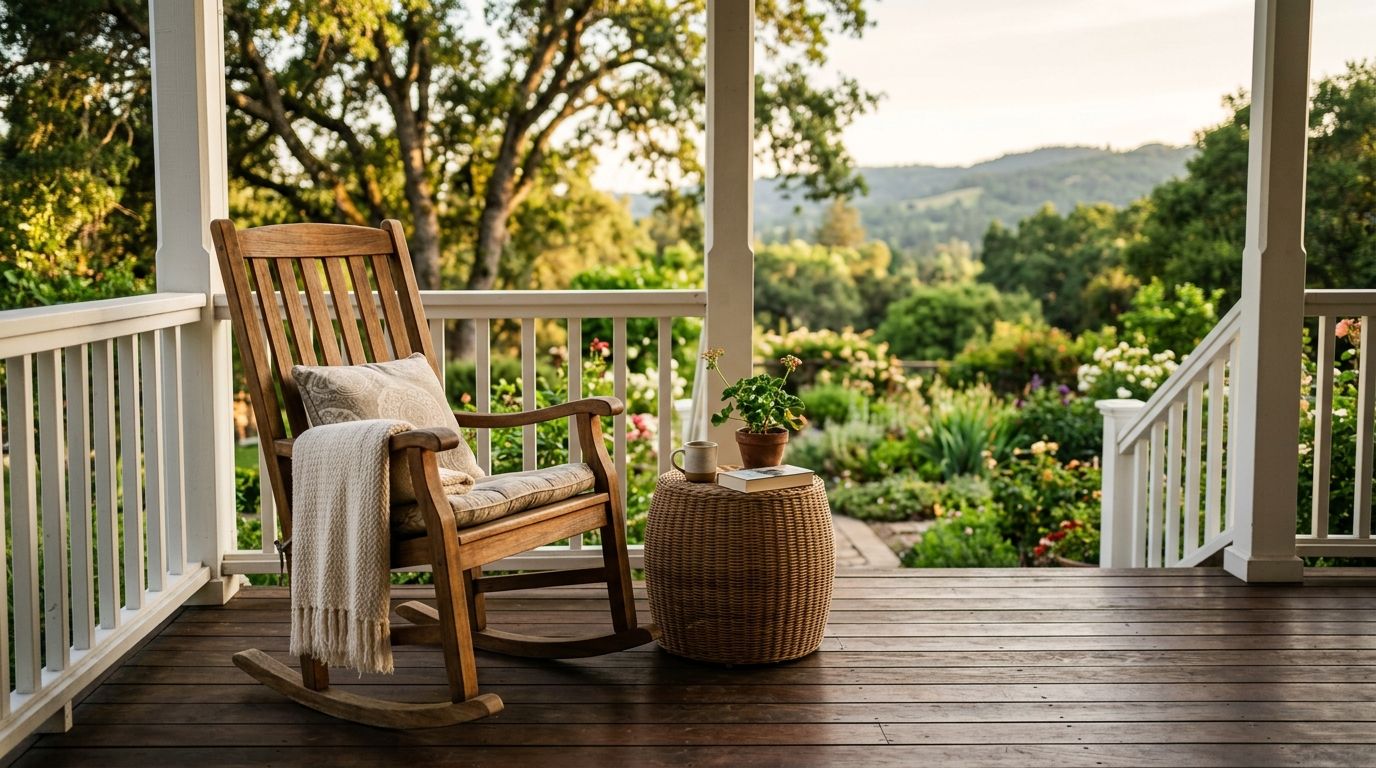
A traditional wood rocker — oak, cherry, or teak — is what most people picture when they search for a porch rocking chair, and it earns that reputation with a deep curved seat and a runner base that rocks smoothly on wood porch boards. It's the safest default pick for anyone who wants the classic look without researching materials.
Solid wood pros:
- Comfortable, contoured seat that works for most body sizes
- Widely available in multiple finishes and stains
- Can be sanded and refinished instead of replaced
- Sturdy enough for daily use over many seasons
Solid wood cons:
- Needs sealing or staining roughly once a year to prevent cracking
- Heavier than resin or metal, harder to move for storms
- Untreated wood swells and warps in high humidity
Verdict: Buy if you're willing to do light yearly maintenance for the classic porch look.
2. Resin wicker rocking chair: best for humid and coastal porches
Resin wicker over an aluminum frame replaces natural rattan, which sags and molds in damp climates. It's built for porches near the coast, in the South, or anywhere summer humidity sits high for months.
Resin wicker pros:
- Won't rot, mold, or hold water like natural rattan
- Aluminum frame stays lightweight and rust-free
- Handles direct sun better than untreated wood
- Easy to hose off when it gets dusty or salty
Resin wicker cons:
- Cushions and pads still need to come inside before storms
- Lower-quality resin can look plastic instead of woven
- Seat depth often runs shallower than a wood rocker
Verdict: Buy for anyone on a humid or coastal porch where wood struggles.
3. Poly lumber rocking chair: best budget, lowest-maintenance option
Poly lumber is UV-stabilized recycled plastic lumber, and it's the closest thing to a set-it-and-forget-it porch chair. No sealing, no staining, no insect damage — it just sits outside for years.
Poly lumber pros:
- Never needs painting, staining, or sealing
- Resists rot, insects, and moisture completely
- Cleans with just soap and water
- Holds color without fading the way stained wood can
Poly lumber cons:
- Heavier than resin wicker, awkward for one person to reposition
- Fewer style and color options than wood or wicker
- Lacks the warmth of a natural wood grain look
Verdict: Buy if low maintenance matters more than classic styling.
4. Metal glider rocker: best for windy, exposed porches
A powder-coated steel glider sits lower and heavier than most wood or wicker rockers, which is exactly why it holds up on an open, wind-exposed porch where lighter chairs tip or slide.
Metal glider pros:
- Low center of gravity resists tipping in gusts
- Minimal upkeep beyond occasional rust checks
- Many models fold flat for off-season storage
Metal glider cons:
- Metal surfaces get hot fast in direct summer sun
- Powder coating chips over time, exposing metal to rust
- Less cushioned than upholstered or wood-seat options
Verdict: Hold — only choose this if wind stability is a real problem on your porch, since comfort takes a back seat here.
5. Power rocking recliner: best for gentle motion therapy on a covered porch
A motorized power rocker like the Luna Swivel Rocker brings gentle, adjustable rocking plus heat and massage settings, which helps people managing joint stiffness ease into movement without the strain of pushing off a traditional rocker. This only works on a covered porch, sunroom, or three-season room with an electrical outlet nearby — the upholstery isn't built for rain or direct weather exposure.
Power rocking recliner pros:
- Motorized rock motion needs no leg push, easier on hips and knees
- Heat and massage functions can ease stiffness before or after sitting
- Upholstered comfort beats wood, wicker, or metal for long sits
Power rocking recliner cons:
- Not weatherproof — belongs under cover, not on an open porch
- Requires a nearby power outlet
- Heavier than any of the other four options, hard to reposition
Verdict: Buy for a covered porch or sunroom used for motion therapy; Skip for an open-air porch exposed to rain. Related reading: lift rocking chairs for gentle motion therapy covers the indoor version of this same idea in more depth.
How this list was ranked
Each type above was scored against the six criteria listed earlier — weather resistance, maintenance, comfort and rock resistance, stability, ease of standing up, and portability. No single material wins every category, which is why the list is a decision tree by porch condition rather than one leaderboard: a wood rocker on a shaded, calm porch behaves very differently than the same chair on a windy coastal deck.
Which rocking chair should you choose for your porch?
For most people with a standard covered or partially covered porch, the solid wood rocking chair remains the best default for 2026 — it's comfortable, familiar, and only needs occasional upkeep. Swap to resin wicker if you're in a humid or coastal climate, poly lumber if you want zero maintenance, and a metal glider only if wind stability is an actual issue rather than a hypothetical one. If the porch is enclosed or covered and the goal is gentle joint-friendly motion, the power rocking recliner category is the one to shop, not the outdoor materials above.
FAQ
What's the best rocking chair for a porch in 2026?
A solid wood rocking chair is the best all-around choice for most covered porches in 2026 because it balances comfort, durability, and easy refinishing. Humid or coastal climates do better with resin wicker instead.
Is a wood or resin wicker rocking chair better for outdoor porches?
Wood suits porches with moderate weather exposure and some shelter, while resin wicker on an aluminum frame holds up better in humidity, salt air, or heavy rain. Neither needs to come inside daily, but resin wicker requires less seasonal upkeep.
How much maintenance does a poly lumber rocking chair need?
Poly lumber rocking chairs need essentially no yearly maintenance beyond occasional soap-and-water cleaning. They resist rot, insects, and UV fading without staining or sealing.
Can you leave a power rocking recliner outside on a porch?
No, a power rocking recliner like the Luna Swivel Rocker is built for indoor or fully covered use only, since the upholstery and motor aren't weatherproof. It works well on an enclosed porch or sunroom with an outlet nearby.
What's the best rocking chair for seniors with joint pain?
A power rocking recliner with heat and massage functions reduces the strain of pushing off a traditional rocker, making it the better pick for joint pain on a covered porch. For an open porch, a wood rocker with a proper seat height is the next best option.
Do metal rocking chairs rust outside?
Powder-coated metal gliders resist rust for years, but the coating chips over time and exposes bare metal underneath. Regular rust checks and touch-up coating extend the chair's life on an exposed porch.
How do you choose a rocking chair seat height for someone who has trouble standing up?
A higher seat height, generally in the range used for ADA-accessible seating around 17 to 19 inches, makes standing up easier for people with hip or knee pain. Lower seats force more knee bend and upper-body effort to rise.
Are zero-gravity recliners a good alternative to rocking chairs for patios?
Zero-gravity recliners suit patios where full recline and pressure relief matter more than a rocking motion, but they serve a different comfort goal than a rocker. Choose a rocking chair for gentle continuous motion and a zero-gravity recliner for full-body stillness and elevation.
One last thing
Seat height gets skipped in almost every porch rocking chair comparison, but it's the detail that determines whether someone can actually get back up without help. A seat in the 17 to 19 inch range — the same range used for ADA-accessible seating — reduces the knee bend needed to stand, which matters more for daily comfort in 2026 than the wood finish or wicker weave most buyers focus on first.