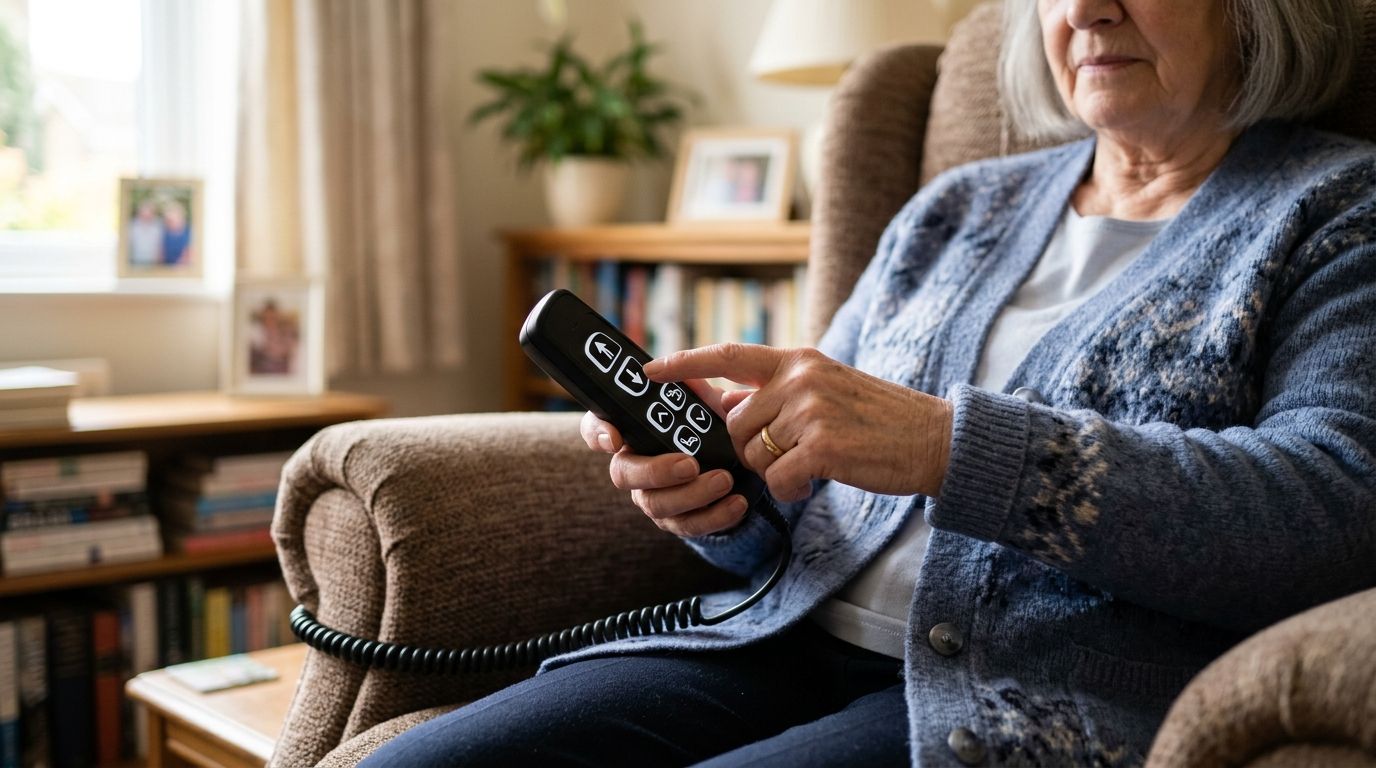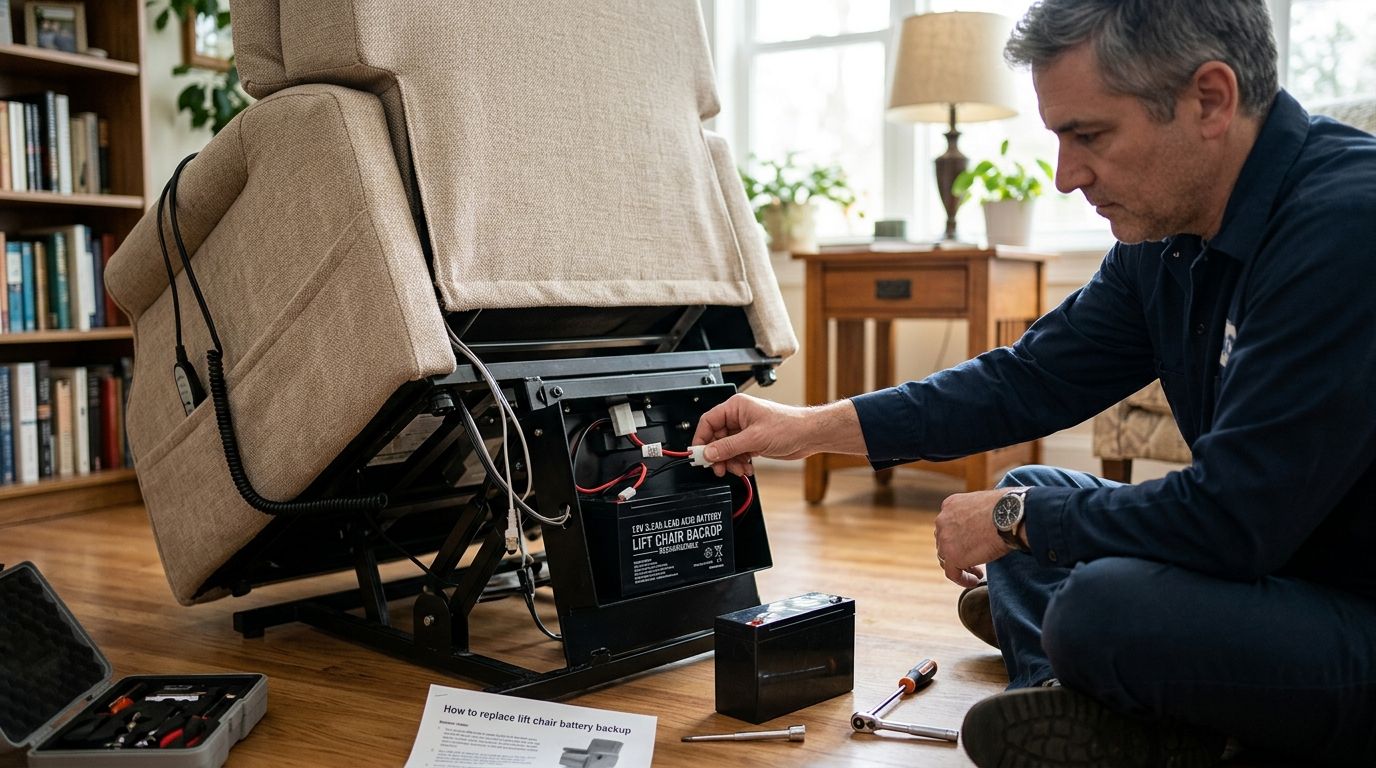
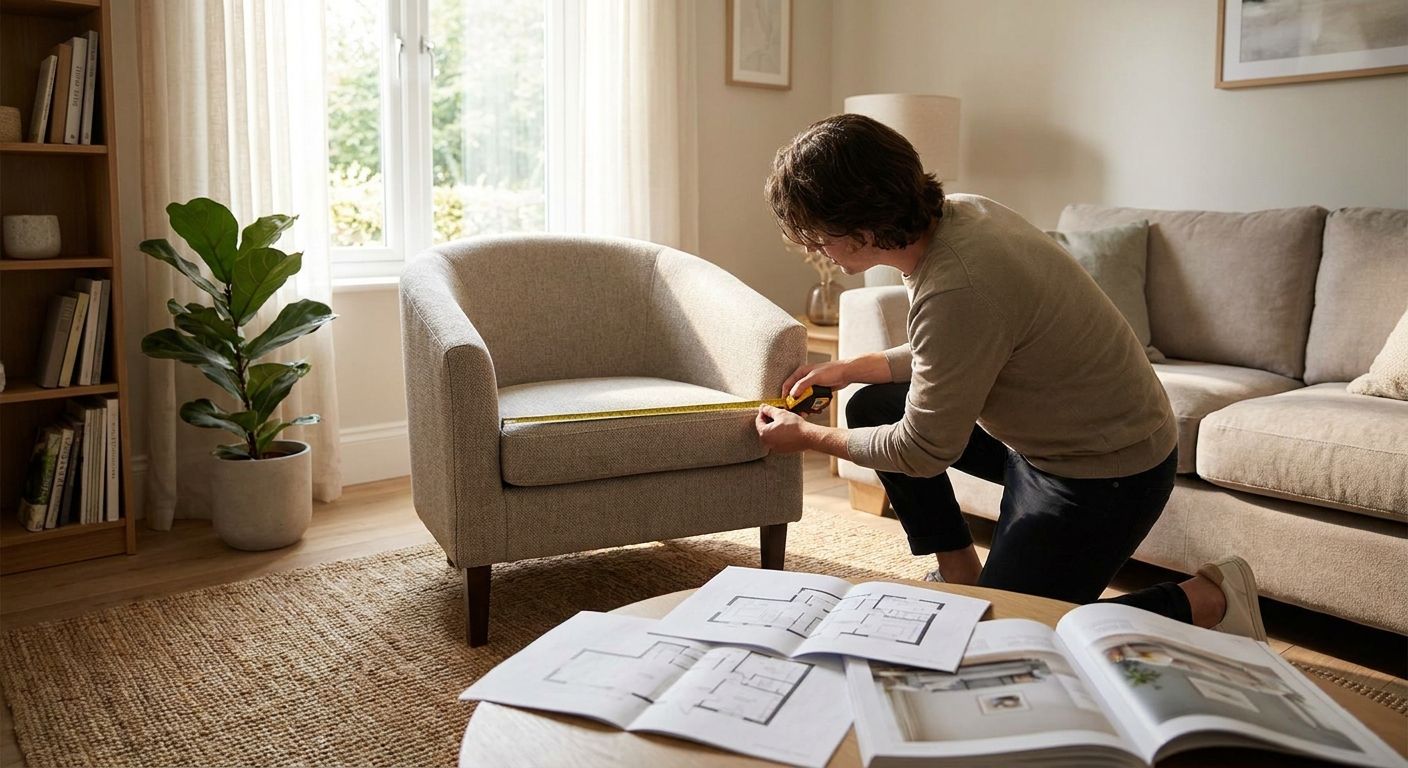
A recliner fits a small room when its clearance style matches your space, not when its listed width happens to look small on a spec sheet. Measure wall clearance, walkway width, and doorway opening before you shop, and choose a wall-hugger frame if any of those numbers come in tight.
- How you choose recliner size for a small room comes down to wall clearance, not seat width alone.
- Wall-hugger recliners need 4 to 6 inches of wall clearance versus 12 to 20 inches for standard recliners.
- Keep 30 to 36 inches of walkway clearance in front of any recliner for safe, everyday movement.
- Petite-frame recliners solve rooms where a standard 32 to 36 inch footprint won't clear a doorway.
- Edward Creation stocks wall-hugger and petite-frame recliners built for tight living rooms in 2026.
Why this matters
Most recliner returns in small rooms trace back to one mistake: measuring the chair's seat width and stopping there. A chair that looks compact folded up in a showroom can push its back three feet into the room once it reclines, or block a doorway once you swing the arms wide enough to sit down.
The fix is treating clearance as a system, not a single number. Wall distance, walkway width, and door opening all have to work together, and the mechanism type — wall-hugger recliners for small spaces versus a standard recliner — decides how forgiving that system can be.
How to choose a recliner size for a small room
Start with the mechanism, then the footprint, then the walkway. This table shows how the three common recliner styles compare on wall clearance, the number that trips up most small-room buyers.
| Recliner style | Wall clearance needed | Best for |
|---|---|---|
| Standard recliner | 12-20 inches | Rooms where the chair sits away from a wall |
| Wall-hugger recliner | 4-6 inches | Apartments, small living rooms, chairs placed against a wall |
| Petite-frame recliner | 4-6 inches, narrower seat | Shorter users and rooms with tight doorways or hallways |
Once you know which row fits your room, measure in this order:
- Doorway clear width. Standard interior doors run 30-32 inches. A recliner's arm-to-arm width has to clear that plus turning room in the hallway.
- Wall-to-nothing distance. Measure the wall the chair will back up against, side to side and straight back to the nearest obstruction.
- Walkway space in front of the chair. Keep 30-36 inches clear so anyone can pass safely, especially in a home with a walker or cane in regular use.
- Reclined depth, not seat depth. A footrest extension can add a foot or more once the chair is fully open — this is the measurement most buyers skip.
- Match the mechanism to the numbers. Under 12 inches of wall clearance means a wall-hugger. More room to spare means a standard recliner works fine.
A full walkthrough of this process, including how to account for adjoining furniture, is in how to measure your space for a lift chair recliner.
Wall-hugger recliners: 4-6 inches of wall clearance
A wall-hugger reclines by sliding the seat forward on a track instead of pushing the backrest into the wall. That mechanical difference is what drops wall clearance from 12-20 inches down to 4-6 inches. Buy a wall-hugger if your recliner has to sit against a wall in a room under roughly 150 square feet. The tradeoff is a slightly smaller recline angle on some models compared to a full standard recliner — check the angle spec before you buy if a deep recline matters to you.
Standard recliners: 12-20 inches of wall clearance
Standard recliners recline by tipping the whole chair back, which is why they need the extra 12-20 inches behind them. This style still works in a small room if you can place the chair in a corner, at an angle, or away from any wall entirely — a floating placement in the center of a room solves the clearance problem without changing the chair. Skip a standard recliner if your only available spot is flush against a wall with less than a foot of room behind it.
Petite-frame recliners: seats built for smaller frames and rooms
A petite-frame recliner combines wall-hugger clearance with a narrower overall footprint — typically a seat under 20 inches wide against roughly 22-24 inches on a standard chair. This is the pick for a smaller user in a smaller room, or any room where the total footprint of a standard chair simply won't clear the doorway. More detail on sizing for a smaller frame is in petite and small-frame lift chairs.
Why recliner size varies room to room
- Mechanism type — wall-hugger versus standard changes required clearance by a factor of two or three.
- User height and torso length — a taller user needs seat depth that a petite frame can't provide, regardless of room size.
- Footrest extension length — powered footrests that extend further add inches to reclined depth that don't show on the folded spec sheet.
- Armrest width — wider armrests add to the arm-to-arm measurement that has to clear a doorway on delivery day.
- Swivel or rocker base — a swivel base needs open floor space around the chair, not just in front of it, to rotate safely.
- Room traffic pattern — a chair on a walking path needs more clearance than one tucked in a corner nobody crosses.
Will a recliner fit in a small living room?
A recliner fits a small living room when it leaves 30-36 inches of walkway clearance and its wall clearance matches the mechanism — 4-6 inches for a wall-hugger, 12-20 inches for a standard chair. Rooms under about 150 square feet generally do better with a wall-hugger or petite-frame model.
How much space do I need behind a recliner?
You need 4-6 inches behind a wall-hugger recliner and 12-20 inches behind a standard recliner to let the mechanism fully open. Measure to the nearest wall, not to the nearest piece of furniture, since furniture can usually shift but a wall can't.
What is the smallest recliner chair size?
The smallest common recliner size is a petite-frame model with a seat under 20 inches wide and 4-6 inches of wall clearance when built as a wall-hugger. Below that, most manufacturers stop calling the piece a recliner and start calling it an accent chair without a lift or recline mechanism.
FAQ
How do I choose recliner size for a small room?
Measure your doorway width, wall clearance, and walkway space first, then pick a wall-hugger recliner if wall clearance is under 12 inches. Standard recliners still work in small rooms placed away from a wall.
What's the difference between a wall-hugger and a standard recliner?
A wall-hugger slides its seat forward to recline and needs only 4-6 inches of wall clearance. A standard recliner tips the whole chair back and needs 12-20 inches behind it.
Is a petite-frame recliner better for small rooms than a standard one?
A petite-frame recliner is better for small rooms when the room or doorway is tight, since it combines wall-hugger clearance with a narrower seat, typically under 20 inches wide.
How much walkway clearance does a recliner need?
A recliner needs 30-36 inches of walkway clearance in front of it for safe, everyday passage. This matters more in homes where a walker or cane is in regular use.
Will a standard recliner fit through a normal doorway?
Most standard recliners fit through a 30-32 inch doorway, but measure the arm-to-arm width of the specific chair before delivery day. Wider armrest models can be tight on narrower interior doors.
Do lift chairs need more clearance than regular recliners?
Lift chairs need the same wall clearance as the recliner mechanism they're built on, plus a check on lift height if ceiling clearance is low. Wall-hugger lift chairs still only need 4-6 inches of wall clearance.
Can a recliner sit in a corner instead of against a wall?
A recliner can sit in a corner if there's clearance on the reclining side, which is often easier to find in a corner than flush against one wall. This is a common workaround for small rooms that can't fit a wall-hugger budget.
What size room fits a standard recliner comfortably?
A standard recliner fits comfortably in a room with at least 12-20 inches of clearance behind it and 30-36 inches of open walkway in front. Below that, a wall-hugger or petite-frame recliner is the safer choice.
One last thing
The measurement that gets skipped most in 2026 buying guides isn't width — it's reclined depth with the footrest extended, and that single oversight is what jams a recliner against a coffee table six months after delivery. Measure the chair fully open before you measure it folded, and the rest of the sizing math gets a lot easier.