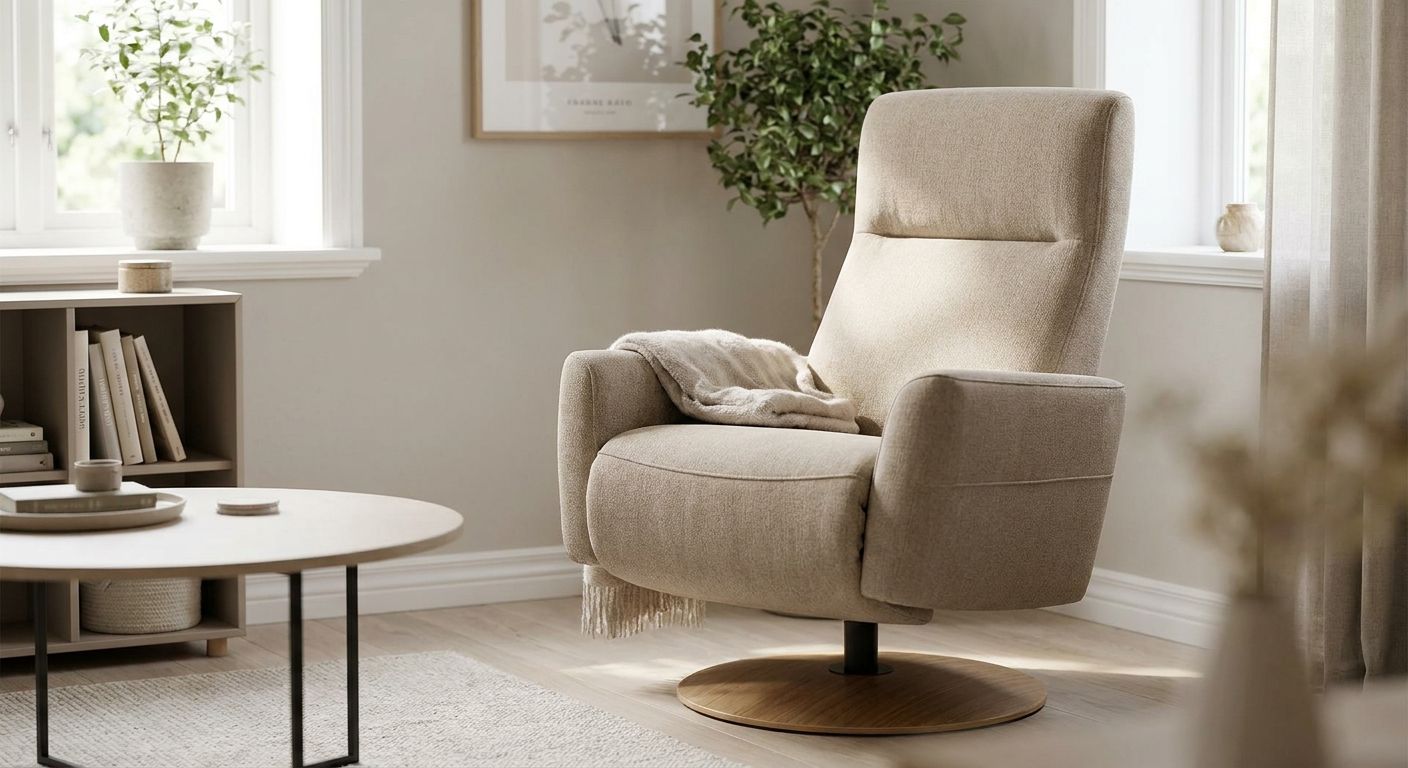
A swivel recliner for a small living room is a rotating, reclining chair sized and positioned to fit tight floor plans without blocking walkways or doorways. Unlike a standard recliner, it has to solve two problems at once: give one person a full recline and let the chair turn toward a TV, window, or conversation without anyone shifting furniture around it.
- A wall-hugger swivel recliner needs the least floor clearance for a small living room because it slides forward to recline instead of tilting back.
- Measure swivel radius, not just chair width, before buying a swivel recliner for a small living room layout.
- The 360° Swivel Accent Chair fits corners without power recline; the Luna Swivel Rocker adds a 270° swivel plus heat and massage for one person who wants more function.
- A zero-gravity swivel recliner like the Nimbus Power Recliner cuts back strain in a compact footprint but needs extra floor space once fully reclined.
Why swivel recliners matter for small living rooms
A small living room punishes bad furniture math faster than any other room in the house. One oversized recliner in the wrong spot blocks a hallway, hides a heat vent, or forces you to route around it every time you walk to the kitchen.
Swivel function solves part of that problem by letting one chair serve two purposes: face the TV during the day, turn toward the room for conversation at night. That flexibility matters more in a small footprint than in a large one, because a small living room usually can't fit a second seat angled the other way.
For mobility-limited shoppers, swivel also cuts down on the twisting and pivoting that causes falls near furniture edges. If you're furnishing for an aging parent or a household with joint pain, the swivel base does some of the repositioning work the body would otherwise have to do. How to choose a recliner size for a small room walks through the measurements before you shop, which is the step most people skip.
Measure your space before you shop
Start with a tape measure, not a showroom visit. A chair that looks compact in a store photo can still eat 12 to 15 inches of extra depth once reclined.
- Measure wall-to-chair distance where the recliner will sit, front and back
- Measure the swivel radius by marking a 360° circle at seat height from the chair's center point
- Check doorway and hallway width the chair has to pass through during delivery
- Note ceiling height if the room has sloped ceilings or low light fixtures
- Mark where a side table, lamp, or outlet needs to sit within arm's reach
Choose the swivel mechanism and base type
Not every swivel recliner turns the same way, and the difference changes how much floor space you need. A 360° swivel base rotates all the way around; a 270° swivel, like the one on the Luna Swivel Rocker, covers most of the room without a full spin.
- Full 360° swivel: best for a chair placed away from walls, in the middle of a sightline
- Partial swivel (270° or less): best for a chair backed against a wall or corner
- Wall-hugger recline mechanism: slides the seat forward instead of tilting the whole frame back, cutting rear clearance needs
- Standard recline mechanism: tilts back 12 to 18 inches from the wall, which eats floor space fast in a small room
- Rocker-swivel combo: adds a gentle rocking motion on top of the swivel, useful for anyone who likes motion without leaving the chair
A wall-hugger swivel recliner is the single best fix for a small living room because it removes the biggest space variable: how far the chair has to tilt back from the wall.
Match the chair size to the room, not the trend
Buying the popular size on a retailer's homepage instead of the size your room needs is the fastest way to end up with a recliner blocking a walkway. Small living rooms need a size decision made from the tape measure, not the catalog.
- Confirm seat width against your actual doorway and hallway clearance
- Check overall chair depth reclined, not just seat depth upright
- Look for compact or petite-frame models if the room is under 120 square feet
- Confirm arm height clears a side table or console you plan to keep
- Skip oversized big-and-tall frames unless the primary user needs that seat width
Wall-hugger design isn't limited to lift chairs. Wall-hugger recliners for small spaces covers how the mechanism applies across recliner styles, swivel included.
Decide between manual and power-assisted models
A manual swivel recliner costs less to manufacture and has fewer parts to fail, which matters if the chair sees daily use. A power-assisted swivel recliner adds motorized recline and sometimes heat or massage, which trades simplicity for convenience.
- Manual lever recline: works during a power outage, needs more arm strength to operate
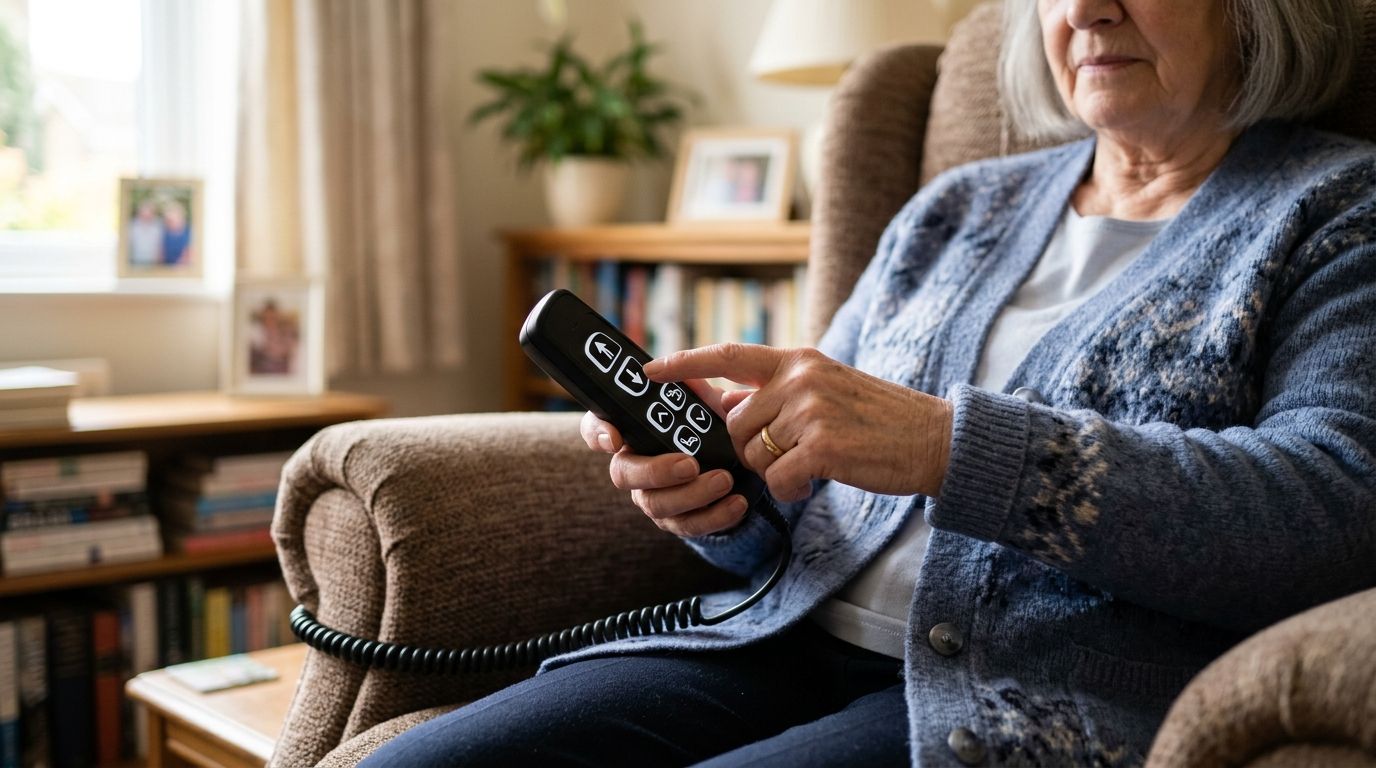
- Power recline with remote: easier for limited grip strength or arthritis, requires an outlet near the chair
- Power recline with heat and massage: adds therapeutic value for lower back or joint pain, adds weight and bulk to the frame
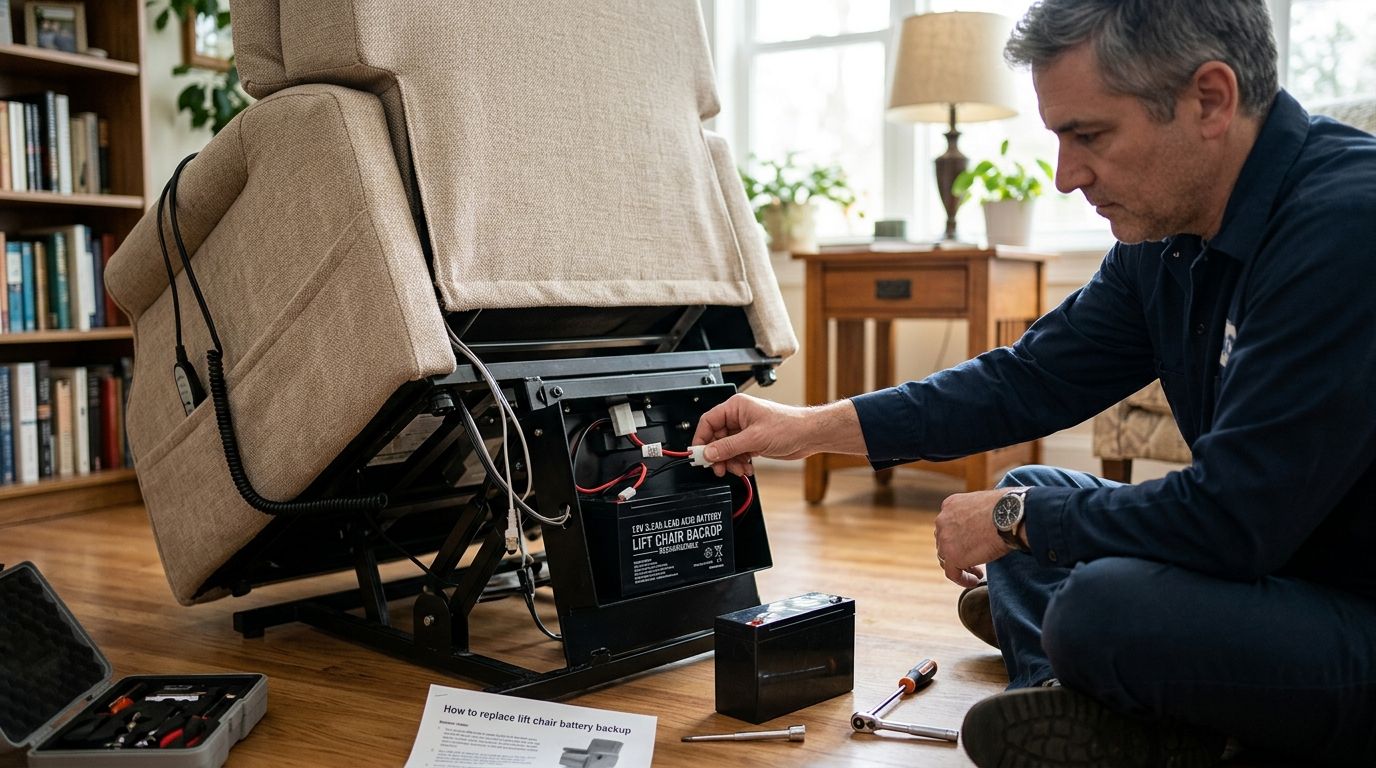
- Battery backup options: worth checking if the household already relies on a power recliner elsewhere in the home
This is where a small-room shopper has two real options at this price and function point. The Luna Swivel Rocker pairs a 270° swivel base with power recline, heat, and massage in a velvet-upholstered frame built for one person. The 360° Swivel Accent Chair skips power features entirely and focuses on a lighter, corduroy-upholstered profile that turns fully in tight corners.


Plan the layout around the chair, not around the wall
A swivel recliner earns its keep when it can turn toward more than one focal point. Placing it dead center against a wall wastes the swivel function entirely.
- Leave at least one open side for the swivel arc to clear a side table or ottoman
- Angle the chair toward a natural walking path, not directly in it
- Keep a lamp or reading light within reach of the swivel radius, not fixed to one fixed sightline
- Test the layout with painter's tape on the floor before the chair arrives
- Confirm the outlet location matches the final chair position for power models
Test recline range and swivel resistance in person
A showroom test or a documented return window tells you more than a spec sheet. Swivel bases vary in resistance, and recline range varies more than most buyers expect between wall-hugger and standard mechanisms.
- Sit and swivel a full rotation to feel for smooth versus sticky resistance
- Recline fully and check the actual rear clearance against your measured wall space
- Stand up from the reclined position to confirm it's manageable without help, especially for older users
- Check the return or exchange policy before buying online without a showroom test
Comparison: swivel recliner options for small living rooms
| Option | Best for | Key limitation |
|---|---|---|
| Wall-hugger swivel recliner | Rooms placed tight against a wall | Recline range is shorter than a standard tilt-back chair |
| 360° swivel accent chair | Corners needing a full rotation | No power recline or lift assist |
| Swivel rocker recliner with heat and massage | One user who wants swivel plus therapeutic features | Heavier frame needs more floor clearance than a basic accent chair |
| Zero-gravity swivel recliner | Back pain relief in a compact footprint | Zero-gravity position extends forward reach when fully reclined |
Common mistakes small living room shoppers make
- Measuring chair width only. Recline depth, not seat width, is what blocks a hallway or hits a wall.
- Skipping the swivel radius test. A chair can look small in a photo and still need a 4-foot circle to turn freely.
- Choosing dark, bulky upholstery. A small room reads even smaller with a heavy fabric and dark color on the largest piece of furniture in it.
- Assuming every wall-hugger claim applies equally. Recline mechanisms vary by model; check the actual rear clearance spec, not just the marketing label.
- Ignoring delivery access. A recliner that fits the room can still fail to fit through the doorway or up a narrow stairwell.
Edward Creation's swivel recliner lineup covers both ends of this decision: a lighter accent chair for corners and a power-assisted swivel rocker for daily comfort. How to measure your space for a lift chair recliner has the full measuring checklist if the room is on the smaller side of average.
FAQ
What's the best swivel recliner for a small living room in 2026?
A wall-hugger swivel recliner is the best fit for a small living room in 2026 because it needs the least rear clearance to recline. Models like the Nimbus Zero-Gravity Power Recliner combine that mechanism with a compact swivel base.
Is a wall-hugger recliner better than a standard swivel recliner for tight spaces?
Yes, a wall-hugger recliner is better for tight spaces because it slides the seat forward instead of tilting the whole frame back. A standard recline mechanism can need 12 to 18 inches more rear clearance.
How much floor clearance does a swivel recliner need?
Clearance depends on the swivel arc and the recline mechanism, so measure a full circle at seat height plus the reclined depth. A 360° swivel needs a full circle of open floor; a 270° swivel like the Luna Swivel Rocker needs less.
Can a swivel recliner double as a lift chair for mobility support?
Most swivel recliners do not include a lift function, since swivel and lift mechanisms serve different needs. Shoppers who need standing assistance should look at a dedicated power lift recliner instead of a swivel-only model.
What size swivel recliner fits a studio apartment?
A compact or petite-frame swivel recliner fits a studio apartment best, since these models trim both seat width and recline depth. Check the chair's reclined depth against your actual wall-to-chair distance before buying.
Is 360-degree swivel better than 270-degree for small rooms?
A 270° swivel works better against a wall or in a corner, while a full 360° swivel suits a chair placed away from walls. Neither is universally better; the room layout decides which one fits.
How do I measure my living room for a swivel recliner?
Measure the swivel radius as a full circle from the chair's center point, then measure the reclined depth against the nearest wall. Check doorway width separately, since delivery access is a common reason chairs get returned.
Do swivel recliners work well for seniors with limited mobility?
Swivel recliners help seniors with limited mobility by reducing the twisting needed to reach a side table or turn toward a doorway. For seniors who also need help standing up, a power lift recliner adds a standing-assist function that a swivel-only chair doesn't have.
One last thing
The recline mechanism matters more than the swivel spec for a small room. Two chairs with the same 360° swivel base can need a 6-inch difference in rear clearance depending on whether they use a wall-hugger or standard recline design, and that difference decides whether the chair fits the wall you actually have.