The easiest lift chair fabric to clean is faux leather or vinyl-style upholstery — spills wipe off with a damp cloth in seconds and nothing soaks into the cushion underneath. The tradeoff most shoppers skip past: faux leather runs warmer against skin in summer, and low-grade vinyl cracks after a couple of years of daily transfers in and out of a power lift recliner.
- Faux leather and vinyl are the easy to clean lift chair fabric options that wipe up spills in seconds.
- Performance fabric rated W or WS on the cleaning tag is the best middle ground between comfort and cleanup in 2026.
- Chenille, velvet and micro-suede feel premium but trap odors and stains around the seams and stitching.
- Genuine leather cleans easily but needs conditioning every few months to avoid cracking near the seat crease.
- Households managing incontinence or frequent transfers should rule out anything rated solvent-only or vacuum-only.
Why this matters
A lift chair gets used every day, often for 8-plus hours, by someone who may spill drinks, drop food, or need help with incontinence care. Fabric that looks good on a showroom floor in 2026 but only takes solvent cleaning turns into a maintenance headache within months. Getting the fabric choice right before you buy saves you from a chair that smells musty or stains permanently by year two — a detail cleaning and maintaining a power lift recliner covers in more depth once you own the chair.
Which lift chair fabric is easiest to clean?
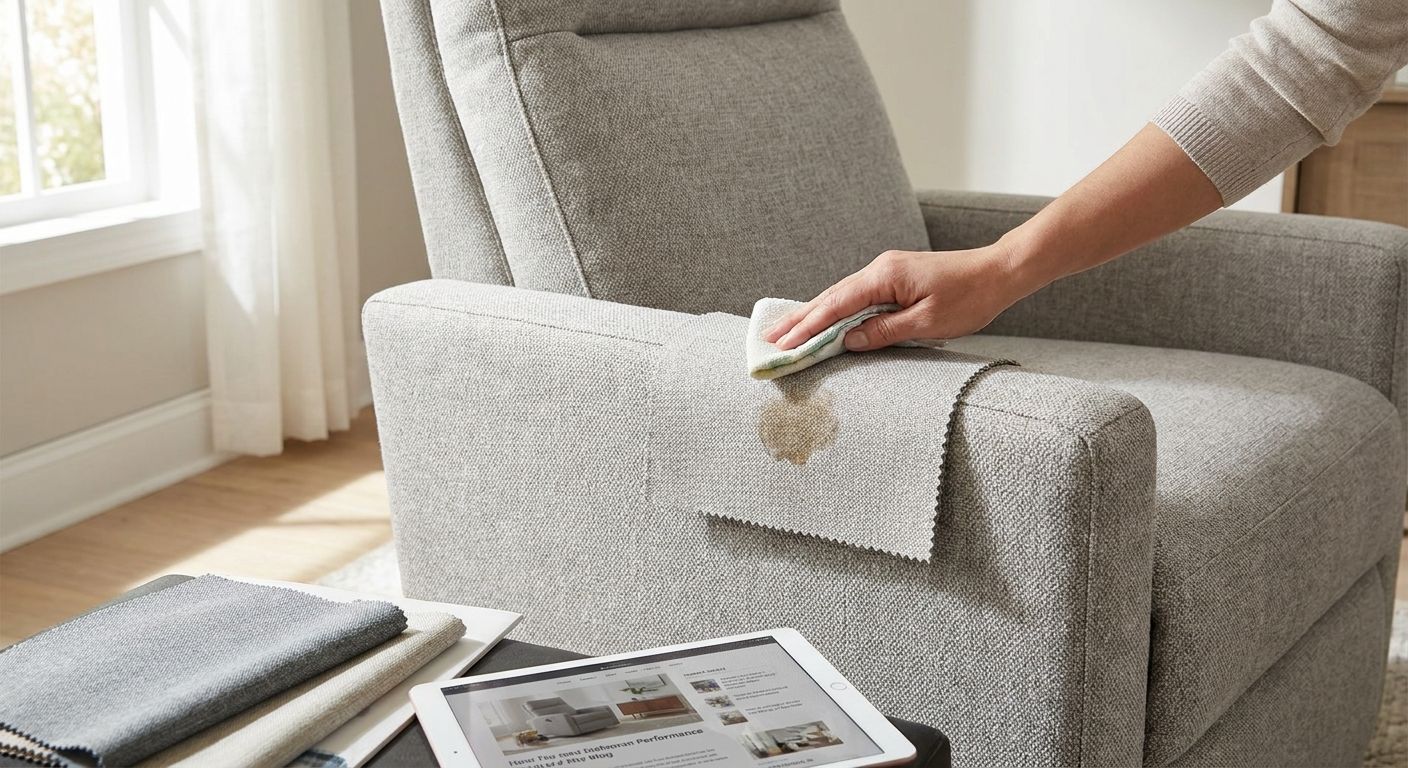
Most upholstery — including lift chair fabric — carries a manufacturer cleaning code: W means water-based cleaners only, S means solvent-based only, WS means either works, and X means vacuum only, no liquid. That code, more than the fabric's name, tells you how much work the chair will be.
| Fabric type | Typical cleaning code | Wipe-clean speed | Best for | Verdict |
|---|---|---|---|---|
| Faux leather / vinyl | W | Fastest — damp cloth, done | Spills, pets, incontinence pads | Buy |
| Performance fabric | W or WS | Fast — mild soap and water | Fabric feel without the fuss | Buy |
| Genuine leather | S or WS depending on tannage | Moderate — needs conditioner | Buyers who wipe often, skip harsh cleaners | Hold |
| Microfiber | W | Moderate — brush and blot | Light spills, low pet dander homes | Hold |
| Chenille / velvet | S or X | Slowest — often needs a professional | Showroom looks, low-spill households | Skip for caregivers |
Faux leather and vinyl: the wipe-and-go winner
Faux leather and vinyl-style lift chair fabric top the list because nothing absorbs into the surface. A damp cloth and mild soap lift most spills, food residue, and skin contact oils without leaving a mark. This is the fabric to pick for anyone managing incontinence, frequent snacking in the chair, or a pet that jumps up next to the recliner.
Performance fabric: close second, better feel
Performance fabrics — the kind rated WS on the cleaning tag — resist staining at the fiber level instead of relying on a slick surface. They feel softer than vinyl and still clean up with soap and water in most cases. For a household that wants the comfort of fabric but can't afford a chair that stains permanently, this is the practical middle ground in 2026.
Genuine leather: durable, but it needs upkeep
Leather wipes clean easily day to day, but it dries out and cracks near the seat crease without conditioning every few months. If nobody in the house wants to add a leather-care routine to their calendar, skip it — the cleanup ease doesn't offset the maintenance work over a 5-plus year ownership period.
Chenille and velvet: comfortable, but they hold onto stains
Chenille, velvet, and micro-suede have deep pile that traps crumbs, pet hair, and moisture in the weave. Many of these fabrics are rated S or X, meaning water-based cleaners are off the table and professional cleaning becomes the only real fix for a set-in stain. They're a fine choice for a low-spill household, but a poor match for anyone doing hands-on caregiving.
Why cleanability varies so much between lift chairs
Fabric name alone doesn't determine how easy a chair is to clean — these factors matter just as much:
- Frequency of spills or incontinence care — daily exposure to liquid needs a W-rated or vinyl surface, not an S-rated one.
- Pets in the house — pet hair and dander cling to chenille and velvet far more than to smooth vinyl or performance weaves.
- Sun exposure — faux leather and dark colors fade faster near a sunny window than performance fabrics do.
- Seam and stitching design — quilted or channel-tufted backs trap crumbs in the seams regardless of fabric type.
- Foam density under the fabric — dense foam dries faster after a wipe-down; softer foam holds moisture longer and can mildew.
- Who's doing the cleaning — a caregiver wiping the chair daily needs a W-rated fabric; an occasional light dusting is fine on chenille.
The chair's fabric is only half the equation if the frame or lift mechanism isn't a good fit for the user's body — lift chairs for arthritis and joint pain relief covers how seat depth and recline angle affect daily comfort alongside the fabric choice.
“If a fabric needs a solvent cleaner and someone in the house needs daily help getting in and out, that fabric is the wrong choice no matter how it looks in the showroom.”
Once you've settled on a cleaning code that fits the household, the seat width and weight capacity narrow the list further. A handful of Edward Creation lift chairs cover the range from standard to oversized frames:


Is faux leather or fabric better for a lift chair?
Faux leather wins on cleanup speed for most households in 2026, but a performance fabric rated WS comes close while feeling warmer against the skin in cooler rooms. Choose faux leather for daily heavy use or incontinence care, and performance fabric when comfort and appearance matter as much as cleanup time.
Can you steam clean a lift chair?
Steam cleaning is safe on fabrics rated W or WS but can warp faux leather seams and damage the foam underneath solvent-only (S-rated) chenille or velvet. Check the cleaning code tag under the seat cushion before running a steamer over any lift chair fabric.
What fabric is best for incontinence on a lift chair?
Vinyl or faux leather rated W is the best fabric for incontinence because liquid sits on the surface instead of soaking into padding, and a damp cloth handles cleanup in under a minute. Performance fabric with a moisture-barrier backing is the next-best option if a softer feel matters more than pure wipe-clean speed.
FAQ
What's the easiest lift chair fabric to clean?
Faux leather and vinyl-style upholstery are the easiest lift chair fabrics to clean because spills wipe off the surface instead of soaking into the cushion. Performance fabric rated WS on the cleaning tag is the closest fabric alternative for households that want a softer feel.
Is faux leather or fabric better for a lift chair?
Faux leather cleans faster for daily spills and incontinence care, while performance fabric offers a warmer, softer seat with nearly the same cleanup ease. Pick based on how often the chair gets wiped down versus how much the seat surface temperature matters to the user.
Can you use a steam cleaner on a lift chair?
Steam cleaning works on fabrics rated W or WS but can damage solvent-only (S-rated) chenille, velvet, or micro-suede upholstery. Always check the cleaning code tag under the cushion before applying steam or liquid to any lift chair fabric.
What fabric is best for incontinence on a lift chair?
Vinyl or faux leather rated W is best for incontinence because liquid stays on the surface and wipes away in under a minute. A performance fabric with a moisture-barrier layer is the next-best choice if a caregiver wants a softer seat surface.
Does leather crack on a power lift recliner?
Genuine leather can crack near the seat crease on a power lift recliner if it isn't conditioned every few months, since daily recline and lift motion flexes that exact spot. Faux leather is more resistant to this specific wear pattern but degrades differently over time.
What does the W S WS X cleaning code mean on furniture?
W means clean with water-based products only, S means solvent-based cleaners only, WS means either works, and X means vacuum only with no liquid cleaning. The code appears on a tag attached to the fabric, usually under the seat cushion or on the frame.
How often should you clean a lift chair fabric?
Wipe down high-touch areas like armrests and the seat weekly, and do a full cushion clean monthly if the chair sees daily use. Households managing spills or incontinence should wipe the seat surface after each incident rather than waiting for a scheduled cleaning.
One last thing
The cleaning code tag tells you more than the fabric name ever will — two chairs both labeled "performance fabric" can carry different codes, and only one of them takes a damp cloth safely. Check that tag before you buy, not after the first spill in 2026.