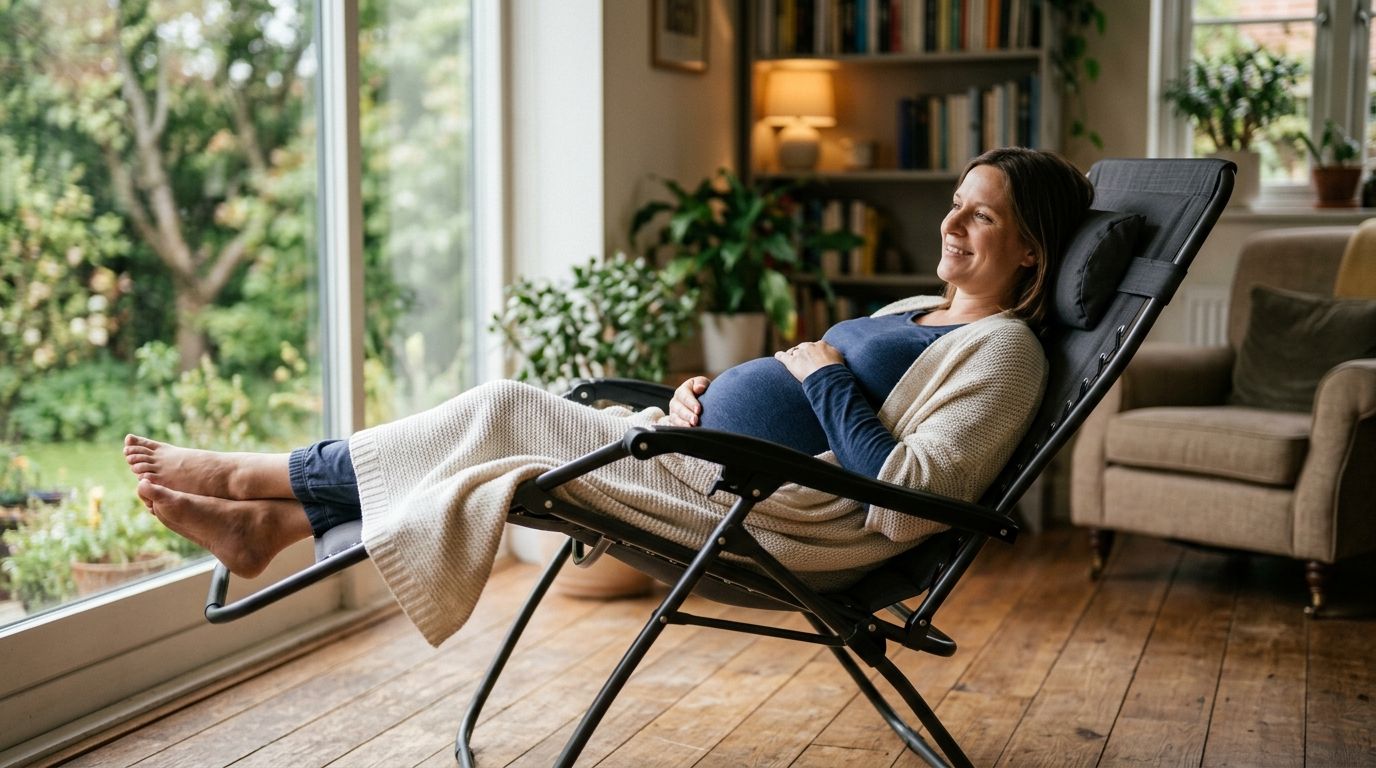
Zero gravity chair for pregnancy comfort means a recliner that tilts your hips above heart level, taking weight off the lower spine and swollen ankles without forcing you to lie flat on your back. Pregnant bodies carry weight differently trimester to trimester, so the seat that felt fine at 12 weeks can feel wrong at 32 weeks — this guide breaks down what actually changes and what to look for at each stage.
- A zero gravity chair for pregnancy works by lifting the legs above heart level to reduce lower-back load and ankle swelling.
- Manual zero gravity chairs cost less and work fine through the second trimester; power models earn their keep in the third.
- Skip heat and massage settings during pregnancy and confirm any recliner use with your doctor first.
- The Nimbus Zero-Gravity Power Recliner adds a wall-hugger design and power headrest, useful for small rooms and easier stand-assist exits.
- Recline angle, footrest height, and easy exit matter more than price for pregnant users in 2026.
Why zero gravity chairs matter for pregnant users
A regular sofa or recliner puts you at roughly a 90 to 110 degree hip angle, which does nothing for swollen feet or a compressed lower back. Zero gravity positioning typically runs between 130 and 170 degrees of recline, spreading body weight across the seat back and taking direct pressure off the sciatic nerve and lumbar spine — the two complaints that show up most in the third trimester.
The need shifts by trimester. Early pregnancy comfort is about avoiding stiffness during long work-from-home days. Late pregnancy comfort is about getting in and out of a chair without help, managing ankle swelling, and finding a position that doesn't restrict circulation to the legs. A chair bought for week 14 rarely still fits the body at week 34 without adjustment.
Verdict: the right zero gravity chair for pregnancy is the one that still lets you stand up unassisted in your ninth month — recline angle and exit ease matter more than cushioning or fabric.
Check your recline angle before buying
Most pregnant users do better in the mid-range of recline rather than the flattest setting, since a fully flat zero gravity position can compress the vena cava late in pregnancy.
- Test the chair at a 130 to 150 degree recline before buying full-flat models
- Ask your OB or midwife about safe recline positions for your specific trimester
- Avoid chairs that lock into only one extreme angle
- Look at zero gravity recliners for home relaxation and comfort to compare adjustable-angle models before you commit to one recline setting
Test the footrest height for swelling relief
Swollen ankles need the feet raised above the heart, not just extended flat.
- Sit in the chair for at least 10 minutes in-store or during a trial period, not 30 seconds
- Check that the footrest locks at a height that clears your hips, not just your knees
- Confirm the footrest doesn't press directly against the calf, which restricts circulation
- Pair the chair with a rolled cushion under the knees if the built-in footrest sits too low
Measure your space and doorway clearance
A zero gravity chair needs room to recline fully, and pregnancy is the wrong time to be squeezing past furniture.
- Measure the wall clearance needed for full recline, not just the folded footprint
- Check doorway width if the chair needs to move between rooms as due date approaches
- Leave at least 24 inches of walking space beside the chair for late-pregnancy mobility
- Review how to measure your space for a lift chair recliner before ordering anything larger than your current chair
Prioritize easy-entry and easy-exit design
Getting in and out becomes the real test by month seven or eight, not comfort while seated.
- Favor lower arm height so you can push up with your hands
- Look for a seat height close to standard dining chair height, not a deep lounge seat
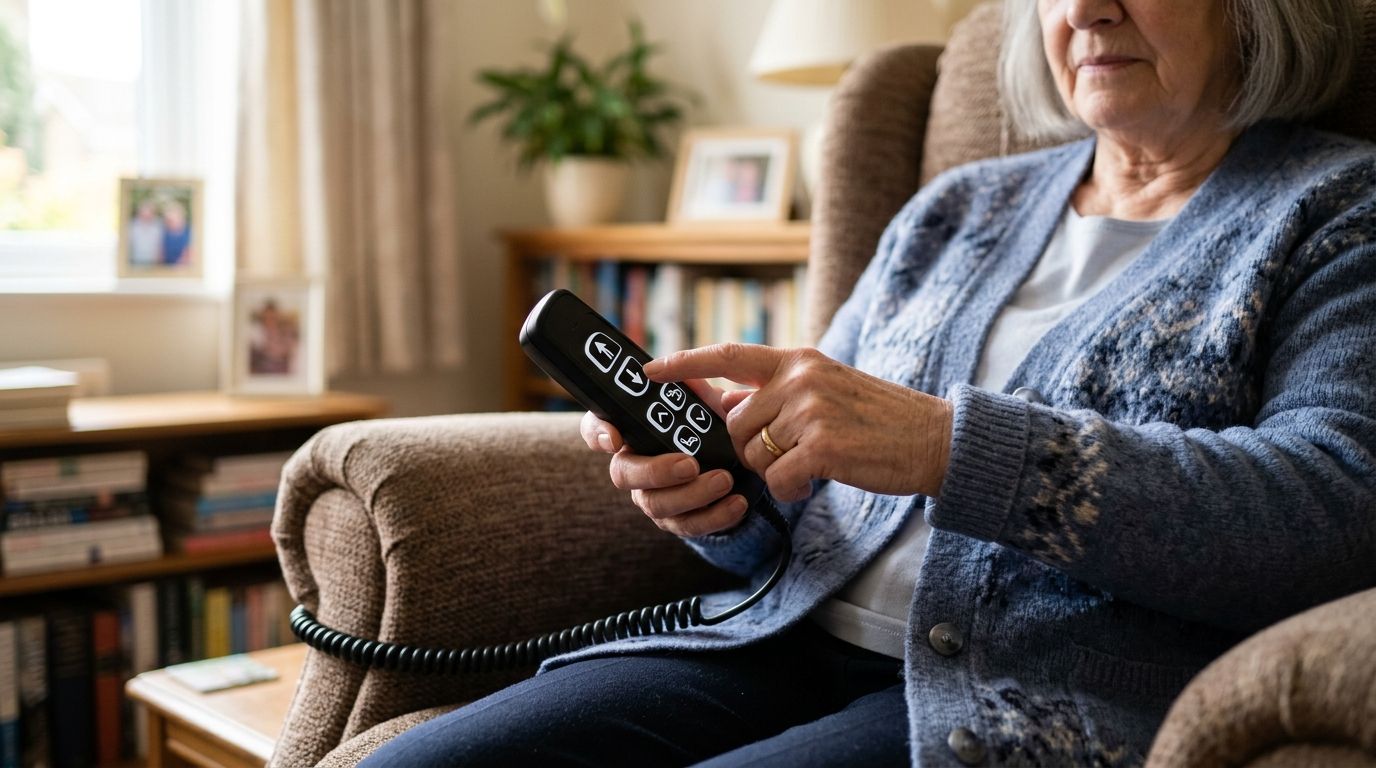
- Consider a power lift function if bending at the knees becomes painful in the third trimester
- Practice the exit motion in the store, not just the sit-down
Add lumbar and belly support cushions
Built-in cushioning rarely accounts for a growing belly changing your center of gravity.
- Add a wedge cushion behind the lower back for extra lumbar support
- Use a small pillow under one hip if lying fully back feels uncomfortable
- Rotate cushion placement as your belly grows through each trimester
- Skip any cushion that pushes the belly forward against a seatbelt-style strap, if the chair has one
Consider a manual model before power
A manual zero gravity chair is the lower-cost route and works fine for most of the first two trimesters, when standing up unassisted still comes easily.
- Manual chairs need a body-weight push to recline, which some find harder past 30 weeks
- Check manual zero gravity chairs for small budgets if a power model isn't in the plan
- Power models like the Nimbus Zero-Gravity Power Recliner add a stand-assist motor, which becomes more useful as the third trimester progresses
- Weigh the extra cost of power against how many months of pregnancy comfort you actually need from the chair
Skip heat and massage settings during pregnancy
Many zero gravity power recliners ship with built-in heat and vibration massage. These are common features, not pregnancy-specific ones.
- Confirm with your doctor before using any heat setting during pregnancy
- Turn off vibration massage functions unless your provider clears them
- Use the recline and footrest functions independent of heat and massage
- Ask about reducing joint strain with a zero-gravity recliner for non-heat, non-massage ways to ease joint pressure
Comparison: zero gravity chair options for pregnancy
| Option | Best for | Key limitation |
|---|---|---|
| Manual zero gravity chair | First and second trimester comfort on a lower budget | Requires a body-weight push to recline; harder to manage past 30 weeks |
| Power zero gravity recliner | Third trimester comfort and easier standing | Heavier, needs a power outlet, costs more up front |
| Standard recliner | Short naps, light lounging between chores | Doesn't lift legs above heart level for swelling relief |
| Cushion or wedge on an existing chair | Renters or very small spaces | Least back support, no true full recline |
The power zero gravity recliner wins for third-trimester comfort because the stand-assist function matters more once bending at the knees gets difficult — the manual chair wins earlier in pregnancy on price alone.


Plan for postpartum use too
The chair you buy in 2026 for pregnancy doesn't stop being useful once the baby arrives.
- A recline angle around 130 to 150 degrees works for supported nursing positions after delivery
- A power lift function helps during postpartum recovery when standing up unassisted is still difficult
- A wide, stable footrest supports leg elevation for postpartum swelling, which can persist for weeks
Common mistakes pregnant buyers make
- Buying based on second-trimester comfort alone. A chair that feels perfect at 20 weeks can be too low or too flat by 34 weeks.
- Ignoring the exit motion. Comfortable seating means nothing if standing up requires help every time.
- Assuming heat and massage settings are automatically safe. These are general recliner features, not pregnancy features — confirm with a provider first.
- Skipping the space measurement. A full-recline zero gravity chair needs real wall clearance, and cramped placement forces awkward, less safe exits late in pregnancy.
- Choosing fabric over function. Easy-clean fabric matters far less than recline angle and footrest height for actual swelling relief.
FAQ
Is a zero gravity chair safe during pregnancy?
Zero gravity positioning at a moderate recline, roughly 130 to 150 degrees, is generally considered comfortable during pregnancy, but confirm any recline angle and any heat or massage settings with your doctor first. Full-flat positions late in pregnancy can compress the vena cava, so moderate recline is usually the safer choice.
What's the best zero gravity chair for pregnancy in 2026?
A power zero gravity recliner with an adjustable recline and stand-assist function, such as the Nimbus Zero-Gravity Power Recliner, works best for third-trimester comfort because it reduces the effort needed to stand up unassisted. Earlier in pregnancy, a manual zero gravity chair covers the same comfort needs at a lower cost.
Should I use the massage or heat feature on a recliner while pregnant?
Turn off heat and massage functions unless your OB or midwife has specifically cleared them for your pregnancy. These features exist on most power recliners regardless of pregnancy suitability.
How is a zero gravity chair different from a regular recliner during pregnancy?
A zero gravity chair reclines to 130 to 170 degrees and raises the legs above heart level, which a standard recliner at 90 to 110 degrees does not do. That extra recline is what relieves lower-back pressure and ankle swelling more effectively.
When should I switch from a manual to a power zero gravity chair during pregnancy?
Most pregnant users notice the need for a power model in the third trimester, once bending at the knees to push back a manual recline becomes uncomfortable. Before that point, a manual chair covers the same recline range at a lower cost.
Can I keep using a zero gravity chair after the baby is born?
Yes, the same recline range and footrest height that helped during pregnancy also supports postpartum leg elevation and nursing positions. A power lift function continues to help with standing during early postpartum recovery.
What recline angle is best for swelling relief during pregnancy?
A recline between 130 and 150 degrees raises the legs above heart level without going fully flat, which is generally the most comfortable range for reducing ankle and foot swelling during pregnancy.
One last thing
The detail most buyers miss: the footrest height matters more than the recline angle for swelling relief, because a footrest that stops at knee level does almost nothing for ankle circulation compared to one that clears the hip. Test that measurement before you test the recline.